
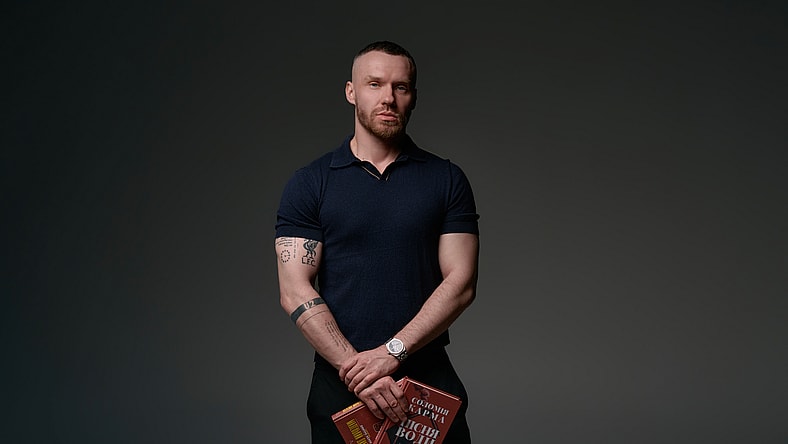
Few stories coming out of Ukraine today involve film. One of them belongs to Dmytro Bielov, a writer whose long, difficult path through the screenwriting world unexpectedly led to the creation of a book publishing house in wartime Kyiv.
In August 2022, while Russia’s full-scale invasion was still in its early months, Bielov wrote a detective script in just two weeks. After finishing, he immediately translated it into English and submitted it to major Hollywood agencies including UTA, WME, and CAA.
Only CAA replied — with a short message explaining that the agency does not accept unsolicited submissions. “It wasn’t rude, just a standard response,” Bielov says. “But it was clear that this path wasn’t going anywhere.”
With no access to representation, he turned to screenwriting competitions. Over the next few years, Bielov entered nearly every major contest he could afford: PAGE International Screenwriting Awards, Austin Film Festival, Final Draft Big Break, Script Pipeline, Screencraft, Scriptapalooza, and many others.
Some scripts reached long lists, but none advanced further. By this point, Bielov had written close to thirty screenplays. All the money he earned went toward entry fees, evaluations, and submissions. “For a long time, there was no progress,” he says. “No agents, no meetings, no feedback beyond contest notes.”

The Black List: Harsh Scores and a Clear Benchmark
The last platform he turned to was The Black List, one of the industry’s most recognized, but demanding avenues. He uploaded around ten scripts and purchased evaluations for each.
The results were discouraging.
One screenplay — a biopic about Elon Musk — received overwhelmingly low scores: twos in nearly every category, and only one three for dialogue. Still, Bielov uploaded more scripts, purchasing additional evaluations. Only one screenplay produced promising results: 6 for dialogue, 7 for characters, 9 for setting. However, The Black List has a well-known threshold: a score of 8 or higher is what typically prompts managers, agents, and producers to reach out. Despite multiple attempts, Bielov never reached that number. “I came close, but ‘close’ doesn’t matter there,” he says. “Below eight, no one contacts you.”
Eventually, he paused all submissions. Nearly two years passed.
A Quiet Email From Canada — and a Netflix-Affiliated Studio
After the long break, Bielov unexpectedly received an email from a Canadian talent agency that works closely with a Netflix-affiliated studio. They had reviewed one of his earlier scripts and requested additional materials.
Within weeks, the studio purchased the screenplay for the minimum pilot rate. He was not considered for showrunning due to language limitations and lack of industry experience, but the sale was real and contractually final.
“In the U.S., that amount wouldn’t change much,” he says. “In Ukraine, especially during wartime, it creates opportunities.”
Using a Hollywood Paycheck to Build a Publishing House
Instead of pursuing further screenwriting deals, Bielov used the money to establish a small publishing house in Kyiv — Adaptationbooks. The imprint focuses on Ukrainian books shaped by the experience of war: fiction, nonfiction, personal accounts, and literature written by civilians and soldiers.
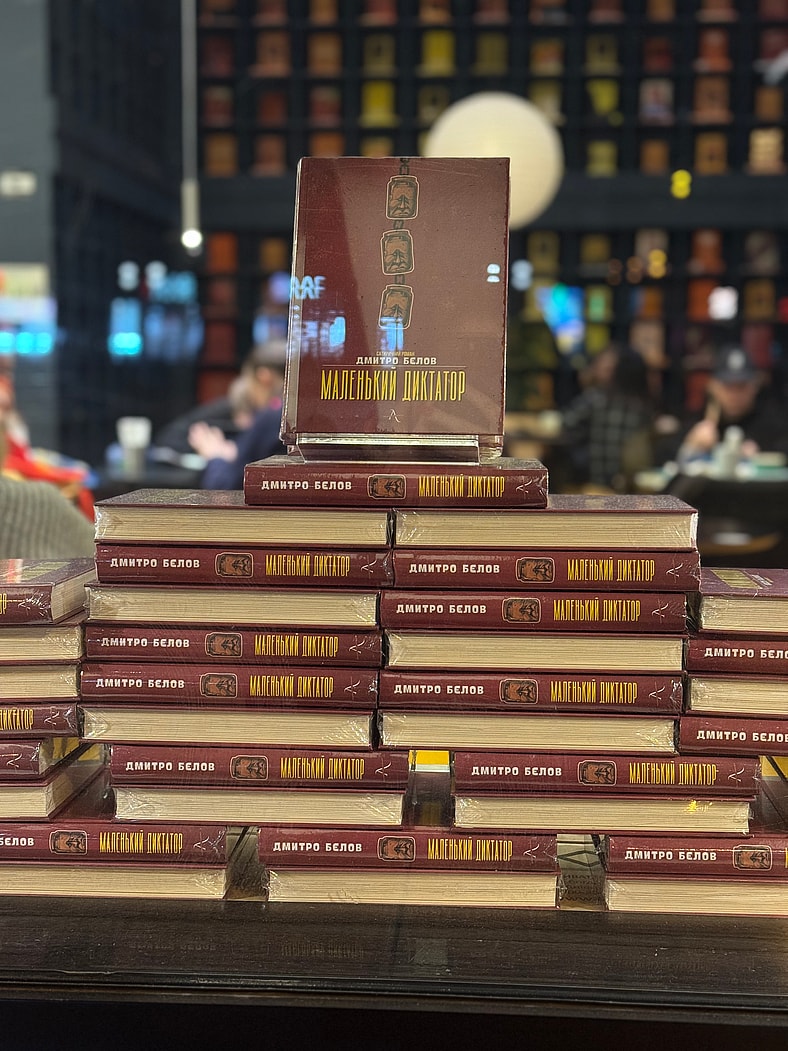
“We publish authors living through circumstances most people can’t imagine,” he explains. “Some are writing from occupied territories, some from the army, some from destroyed towns. These stories matter — and they need a framework.”
Adaptations quickly built a distinct identity. It publishes literary works that address displacement, survival, trauma, resilience, and everyday life under invasion. Bielov handles acquisitions, editing, and development — using skills he gained from years of working with story structure through screenwriting.
A Career Path That Didn’t Follow the Expected Route
Bielov’s experience illustrates a reality familiar to many emerging screenwriters: breaking into Hollywood rarely follows a predictable path. Years of work may yield no feedback, and success often comes from indirect opportunities rather than linear progress.
“I spent years trying to hit that ‘8’ on The Black List,” he says. “It never happened. Instead, another door opened—one I didn’t expect.”
Selling a screenplay to a Netflix-affiliated studio did not relocate Bielov to Los Angeles. It didn’t launch a Hollywood career. But it created the financial space to build something within Ukraine — a publishing house giving voice to people living through the war.
As he puts it: “The sale didn’t change my life dramatically. But it helped me change something here. And that feels more grounded.”