
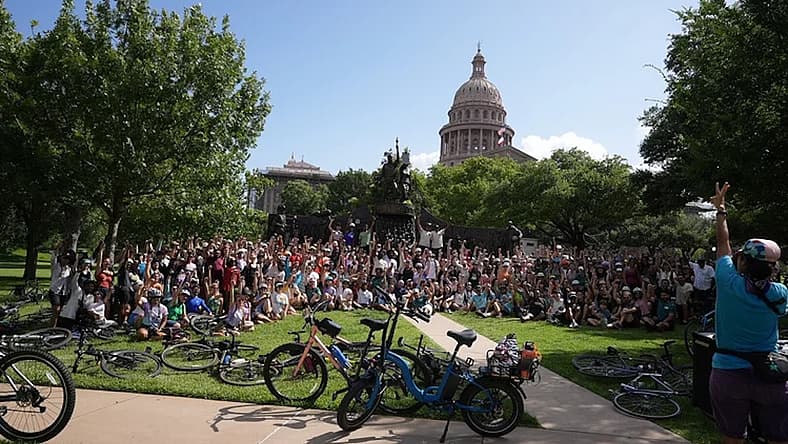
Ya’Ke Smith’s Cycles of Resilience follows a novel way of delivering Black history: by bike.
The new documentary follows the Black History Bike Ride, an Austin nonprofit founded by cyclist Talib Abdullahi to teach people through bike treks to historical sites. They ride, eat, learn, and celebrate history that has too often been overlooked or buried.
It’s the rare thing to combine exercise, learning, and resistance. Of course, learning shouldn’t have to be an act of resistance. But it is, given the efforts of many states and the Trump Administration to erase Black history.
“Taking up space, showing up in large numbers, and remaining connected to others who are committed to change are foundational acts in the creation of a new world,” says Smith, a film professor at the University of Texas at Austin. “Systems of power depend on fear and isolation. They count on people being too afraid to protest, too divided to unite, and too discouraged to believe that meaningful change is possible.”
He adds: “The primary way these forces maintain power is through division, because they understand that when people come together around a shared vision and common purpose, their grip on power becomes increasingly fragile. Gathering to learn, strategize, and speak truth is essential. It not only strengthens solidarity within communities, but also serves as a powerful reminder that collective action has always been one of the most effective tools for challenging injustice. In coming together, we demonstrate that the power of the many is greater than the power of the few.”
Cycles of Resilience plays Saturday and is available for streaming Sunday at the Waco Indie Film Fest, which is led by Samuel Thomas and Louis Hunter and is one of our 25 Coolest Film Festivals in the World.
We talked with Smith, whose previous films include the doc Juneteenth: Faith & Freedom and the recent short “The Ohio, Texas Remix,” about riding toward a better future.
Ya’Ke Smith on Cycles of Resilience and the Black History Bike Ride
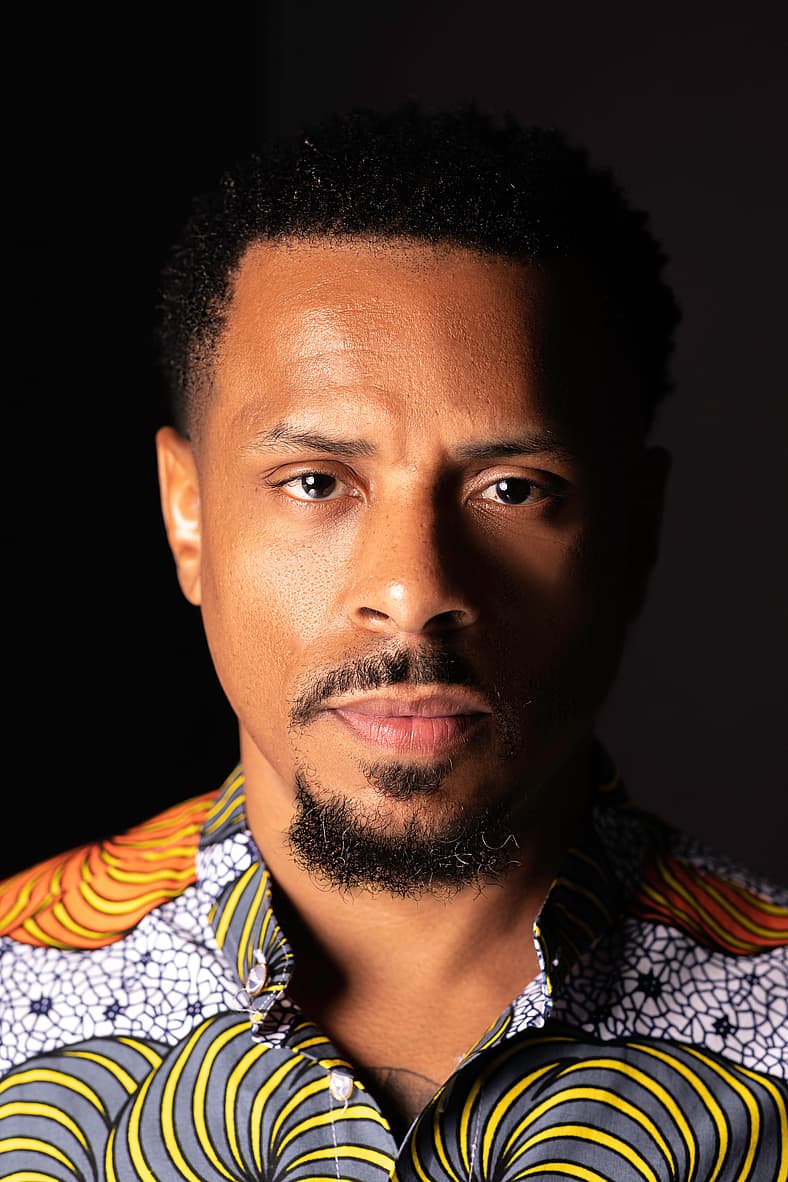
MovieMaker: How did you find out about these amazing bike rides?
Ya’Ke Smith: I had heard of the ride, but as someone who isn’t much of a cyclist, I never got involved and instead observed it from afar. That changed when Talib Abdullahi, founder of Black History Bike Ride (BHBR), received a grant from the City of Austin to create a film about the organization. Someone familiar with my previous documentary, Juneteenth: Faith & Freedom, recommended me for the project.
When Talib and I met for lunch and he shared the story behind BHBR, I was immediately hooked. He founded the organization in the wake of George Floyd’s murder with a vision not only to build community, but also to expose Austinites to the rich Black history that exists in their own backyard. As a filmmaker, professor, and activist who believes in the power of cinema to educate, inspire, and spark dialogue, I knew I wanted to be part of bringing that story to the screen.
MovieMaker: This film and Juneteenth: Faith & Freedom are both about preserving and keeping true history alive. Do you find your filmmaking overlapping more and more with being a historian? If so, why do you think that is?
Ya’ke Smith: My goal with these two films was to share this history in the hope of creating space for us to imagine a better future. While both films examine complicated and often buried histories, challenging the systems and structures that seek to uphold false revisionist narratives, they do so in the spirit of Sankofa: looking to the past in order to build a stronger, more unified present and future.
I approach this work without the naïveté of believing that we will all join hands and march together into a utopian future. What I do believe is that if we confront our history with honesty, humility, and the courage to address its injustices, we can begin laying the foundation for a tomorrow that is more hopeful than the present we inhabit today.
MovieMaker: How do you go about filming an event like this? Any inspirations or reference points? Do you need waivers from everyone, or no, since they’re in public?
Ya’Ke Smith: Lots and lots of planning. Talib, producer Lauren Vunderink, cinematographer Riley Engemoen, and I spent countless hours talking through the visual language of the film, debating which sites would be the most cinematic, and figuring out what equipment we needed to capture the ride in the most dynamic and complete way possible.
In the end, we used three primary cameras, a drone, and GoPros mounted on several of the bikes. That combination allowed us to create an immersive experience for the audience. I didn’t want viewers to feel like passive observers standing on the sidelines. I wanted them to feel like they were on the ride too — moving through the city, experiencing the stories, and sharing in the energy and camaraderie of the cyclists.
I also have to give a shout-out to Brandon Grant and Ariel Marlowe, who are both key members of the organization. They were incredibly helpful throughout the process, making sure everything ran smoothly and safely during the ride. Their support behind the scenes was invaluable and played a major role in making the film possible.
MovieMaker: How do you feel about the term Black history? As an old history major, it’s clear to me that U.S. History is totally enmeshed with Black American history, even in our founding documents and laws — like having a bicameral legislature, and an Electoral College, for the benefit of slave states. And your film points out that it was slavery – not freedom or hard work or the American Way or whatever people want to call it – that made America so rich. To me the existence of “Black history” feels like a response to the deliberate minimization of Black people from just plain “history.”
Ya’Ke Smith: You’re absolutely right. When Carter G. Woodson established what would eventually become Black History Month, his goal was not to separate Black history from American history, but to amplify and celebrate the innumerable contributions African Americans had made to a nation that had largely ignored them.
As you note, and as we explore in the film, slavery helped create the economic engine that powered America’s rise. Yet the story doesn’t end there. After emancipation, Black Americans continued to build — founding schools and universities, shaping public policy, creating businesses, establishing mutual aid networks, and developing community institutions that strengthened the very fabric of this country. Time and again, these contributions have been overlooked, minimized, or attributed to others.
The truth is that Black history is American history. It is not a footnote to the American story; it is central to it. Without the labor, ingenuity, resilience, and vision of Black people, America as we know it would not exist.
This film, much like Juneteeth: Faith & Freedom, is an attempt to help correct that narrative — not by rewriting history, but by telling it more fully, more honestly, and with the depth and complexity it deserves.
MovieMaker: Finally, any thoughts on screening this at Waco Indie?
Ya’Ke Smith: I love this festival. Over the years, I’ve screened several films here, won a few awards, participated in panels and special events, and developed a real connection to Louis and Sam’s mission of amplifying the voices of Texas filmmakers.
Every time I attend, it feels a bit like a family reunion. I get the chance to reconnect with filmmakers from across the state whom I don’t see nearly enough, while also meeting new artists and potential collaborators. That’s one of the things I love most about festivals—the films are important, but so are the relationships and creative exchanges that happen around them.
It’s also incredibly humbling to be invited back for a second consecutive year. Nothing is ever guaranteed, especially when there are so many talented Texas filmmakers creating exceptional work. To have Cycles of Resilience included among this year’s lineup is an honor, and I’m excited to be screening alongside such an inspiring group of storytellers.
Come see Cycles of Resilience!
You can learn more about the Waco Independent Film Festival here.
Main image: The Black History Bike Ride in Cycles of Resilience.