
Zodiac Killer Project director Charlie Shackleton loves films about the power and limitations of film.
The critic-turned-filmmaker’s 2014 debut, Beyond Clueless, studies the influence of teen movies. His 2016 Paint Drying, a depiction of drying paint that he made as a protest against censorship, became a Letterboxd sensation when fans began using their reviews of the film to share life updates. His 2021 The Afterlight, consisting of scenes of dead actors from old films, exists on a single print that degrades with each screening.
The new Zodiac Killer Project deconstructs true-crime documentaries by peeling back the tricks and tropes that convince us of a person’s guilt — it’s filled with what he calls “evocative B-roll” of crime-scene tape, a single footprint, blood pooling, and guilty buildings. In the piece below, he explains how the film, which premiered at Sundance in January, came to be.—M.M.
Charlie Shackleton on His Zodiac Killer Project and True Crime Tropes

My first and only attempt to make a true crime documentary came to an abrupt halt in 2022, when negotiations fell through for the rights to a book called The Silenced Badge: The Zodiac Killer Cover-Up. A memoir by former California Highway Patrol officer Lyndon Lafferty, the book details his lifelong quest to bring the infamous killer — or at least, the author’s preferred suspect — to justice.
The grisly facts of the case are all in the public domain, but without the rights to Lafferty’s book, it simply wasn’t practical to bring his story to the screen, filled as it is with dramatic details exclusive to his text. And so I resolved to lick my wounds and forget about the project, consigning it to a folder on my laptop already brimming with other films which — for lack of funding, enthusiasm, or basic coherence — never came to be.
Instead, I found myself lastingly preoccupied by the unrealised prospect, playing out imagined sequences in my head, and before long, reciting them to friends in various pubs around London. Soon, the mere question, “How have you been?” would reliably set me down a path to describing, in granular detail, the climactic set-piece from a true crime documentary that I would never get to make.
Eventually, it occurred to me that this strange habit of describing a film that doesn’t exist could itself be an interesting subject for film. If it could sustain a feature runtime, I reasoned, the result would be a mirror image of the film I never got to make: a real-time recitation of its every narrative shift and emotional beat—minus, of course, all the proprietary plot details I was legally prohibited from mentioning. In other words, the scaffolding of a true crime doc, with none of the actual content.
This was the genesis of my new film Zodiac Killer Project, which, for better or worse, is essentially 92 minutes of me describing a true crime documentary in pedantic detail.
That the film would be led by my voice seemed clear from the outset. I had, after all, been unwittingly rehearsing the narration over third and fourth pints for months.
What was less clear was what would actually be on screen while I was yapping away. What does the absence of a film actually look like?

I thought back to a research trip I had taken to Vallejo, the small Bay Area city in which the Zodiac Killer’s crimes were centered. Having read about the place in countless true crime books and news articles, and seen it on screen in David Fincher’s 2007 film on the case, I arrived with a preemptive feeling of unease.
One of the true crime genre’s most ingrained received wisdoms is that the places where such macabre crimes take place are indelibly marked by them, and I expected to feel a chill in the air.
Instead, I found a place like any other, with hundreds of intersecting communities vying to define its identity, and thousands of inhabitants going about their lives with little concern for events that took place there some five decades prior. On the ride in from the airport, my cab driver told me he’d never heard of the Zodiac Killer, before launching delightedly into a laundry list of the various rappers to at some point call Vallejo home.
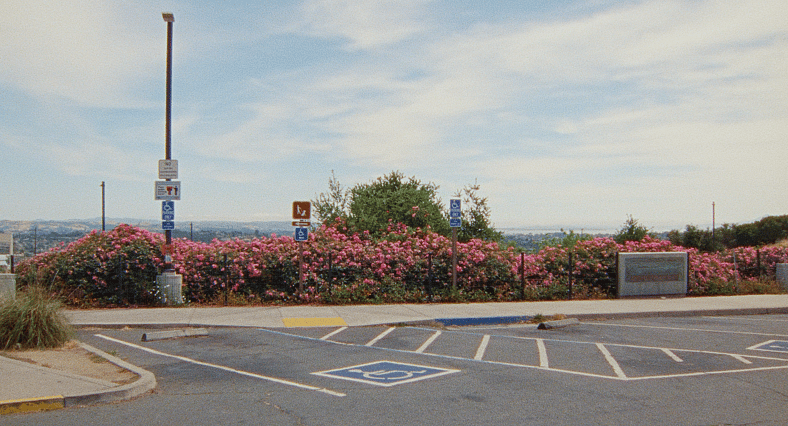
In collaboration with my cinematographer, Xenia Patricia, this formed the basis of the film’s visual approach: not an attempt to conjure the sinister atmosphere of a true crime documentary, but a confrontation with the humdrum reality behind such contrivances.
As carefree pedestrians strolled through “sinister” alleyways, and car stereos blared in “deserted” parking lots, we simply shot what was there: the everyday blank canvas onto which the true crime genre paints its version of the truth.
Zodiac Killer Project arrives in theaters November 21, from Music Box Films.
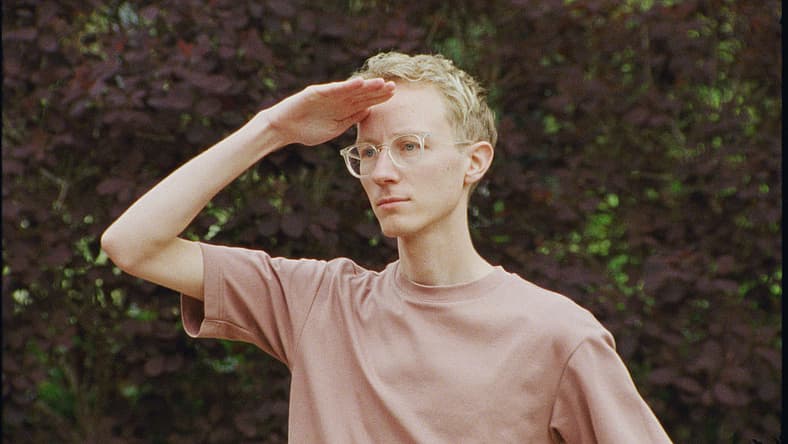
Main image: Charlie Shackleton, director of Zodiac Killer Project