
Sentimental Value editor Olivier Bugge Coutté doesn’t usually fall in love with screenplays. In fact, he tries not to read scripts until the last minute, because he doesn’t want to get caught up in the inevitable changes. He’d rather read the final product, and work from the physical footage.
“My job is to interpret the material. That’s my starting point” says Coutté. “And if the story is there, it will come out of the material. I don’t need the script to tell it to me.”
It’s a surprising approach from the Oscar-nominated editor of Sentimental Value, Joachim Trier’s Oscar-nominated character drama about two sisters and their estranged filmmaker father, attempting to reconnect.
The film isn’t plot-driven. There’s no driving force or big twist awaiting audiences, which means it lives moment-to-moment with the characters. From an editing standpoint, that meant approaching the film with restraint.
“The only thing that is really driving this film is the development in the psychological relationship between the characters,” Coutté says. “When you do a multi-character drama like this, it almost becomes like a zero-sum game. At some point, if you add to one character, it will take away from another one.”
Olivier Bugge Coutté on Being ‘a Little Brutal’ With Sentimental Value

Coutté began cutting while production was still underway, eventually working from 80 hours of footage shot over 65 days. His first assembly ran three and a half hours.
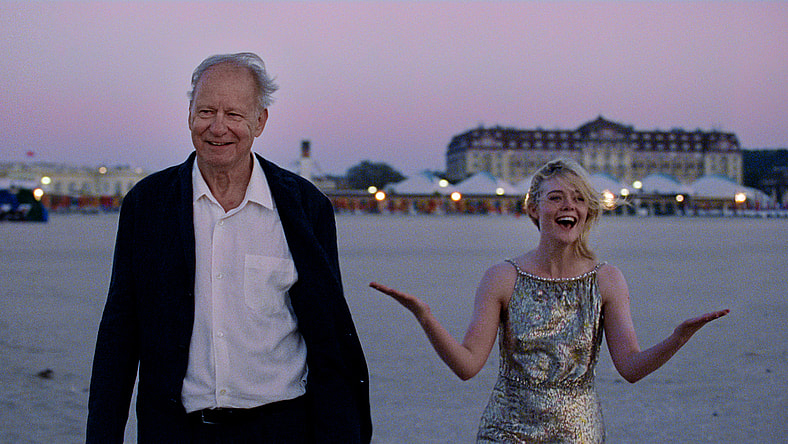
To whittle that down, the editor reexamined the film’s France sequence, which originally ran for 26 minutes. As a result, about 10 minutes of footage was left on the floor, and much of it was devoted to the backstory of Elle Fanning’s character and her professional motivations. It wasn’t because the material didn’t work, but because Coutté wanted to focus on the triangle between the sisters and their father.
“It was so important and strong that we were not able to be equally engaged in her storyline,” he says.
The approach is rooted in character over spectacle, which is something Coutté grew up watching in American films of the ’70s and ’80s. “It can be difficult for me to see myself in somebody who wants to make the whole planet explode,” he admits.
Sentimental Value appealed to him because it was a film about emotions and relationships, and he knew pacing would be key.
“There’s a lot of people crying in this film,” he says, acknowledging that early catharsis would have been a mistake. Instead, he adjusted the rhythm so the audience is never quite satiated, until the very end.
“I would go in a little bit later in a scene or left a scene more abruptly so that the feeling stays unfinished in the audience,” he explains.
The opening sequence is a good example. A scene of Nora (Renate Reinsve) suffering stage panic originally had four minutes of buildup before the breaking point, as well as additional scenes afterward showing her perform. Coutté cut both.
“Once the feeling is fulfilled I cut out to leave a strong punch with the audience,” he says.
He calls the approach “a little brutal” but says it keeps the audience leaning forward instead of sinking back. “You have to keep asking questions right up until the credits, and then just before you give the final answers.”
For Oscar voters paying close attention, Coutté’s craft is evident in the simplest scenes, like the café conversation between Nora and her father, with straightforward cuts.
“The difficulty in making this work is analyzing the temperature constantly in the acting between the two of them, judging each take up against one another,” Coutté says.
He points to the birthday scene as another example. Previously it included banter and exposition, but Coutté stripped it back to almost nothing. “We took all the words out and left it as a silent moment where they look at each other and understand that they still love each other.”
He maintains there’s no formula for knowing when to stop, snip or carry on. “You just have to look at it and say, ‘I’m full now. I’m full of word and emotions. Now I need a pause for it to absorb into my body.’”
Sentimental Value is now in theaters.
Main image: Stellan skarsgård and Elle Fanning in Sentimental Value. Photo by Kasper Tuxen. MUBI