
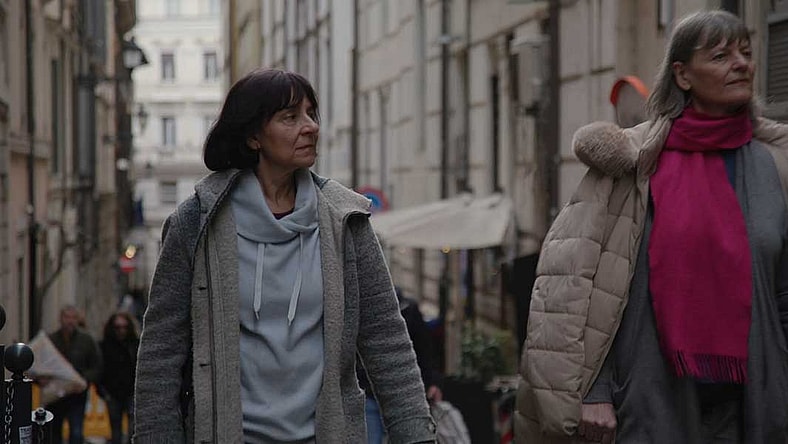
In the evocative new documentary Nuns vs the Vatican, director Lorena Luciano sets out to illuminate the stories of silence, hierarchy and, ultimately, resilience within the Catholic Church.
The film follows former nuns, including Gloria Branciani, Mirjim Kovac and Klara (a pseudonym), as they break their silence about alleged abuse by artist and Father Marko Rupnik and the institution that protected him. Branciani, who appeared during the world premiere this past fall at the Toronto International Film Festival, received a four-minute standing ovation following the screening.
Luciano knew she wanted to make this film after reading a story by former Women Church World magazine editor Lucetta Scaraffia about clergy abuse. The Italian filmmaker spent years in the Catholic school system and had an eye-opening moment about how deeply the culture was shaped by deference to the Vatican.
“I was struck by the fact that all these women couldn’t have their voice heard in any way,” she tells MovieMaker. “It wasn’t the idea of sexual abuse, but the idea of being trapped in something, and it becomes an island with very, very tall walls of silence.”
She says when she first met Branciani, she felt the purity of this woman who wanted to have a meaningful life and serve God and the poor. Finding her and other former nuns to open up posed a challenge, though, and she reached out as far as Mexico, Spain and the United States. She spent a long time researching and developing the project first, but she knew the effort would be worth it.
“I knew if I wasn’t able to find someone to share this incredible story in the first person that this would never be addressed,” she says. “This will never be known. And then when I met Gloria, I recognized her urge to not only tell the truth but to find her voice. She had been dismissed for so long.”
How Lorena Luciano Built Trust to Make Nuns vs The Vatican
Earning the trust of these women also took time, and at first, Luciano left her camera off when speaking with subjects and waited until they were comfortable appearing onscreen. She went into this not knowing if that would ever happen, and was ready to adjust in editing.
In the end, Luciano feels she and Branciani met at the right moment in their lives and she was able to use that relationship to craft an intimate and authentic project. The story was always meant to be a feature film rather than a series, despite Luciano winning an Emmy for her 2019 HBO film, It Will be Chaos. At the Emmys, Luciano also met Mariska Hargitay, who agreed this was an important story and boarded as an executive producer.
“Mariska and executive producer Trish Adlesic were both collaborators and they saw our women as real fighters with a lot of light,” Luciano explains. “Instead of sitting in the darkness, we wanted to bring light, not only to the crimes and the abuse they suffered, but for their future selves. As empowered women who finally found their voice.”
Visually, the filmmaker thought carefully about subtext. Nuns vs The Vatican focuses heavily on hands, a detail reminiscent of prayer but meant to remind viewers that, when words are ignored, people rely on their hands to communicate.
“They are a tool to say there is always a sign of someone trying to say something,” she says. “It’s up to us to look at the details and signals so that we are alert and we do not dismiss an incredible truth that is maybe not said out loud because of the conditions in place.”
Nuns vs The Vatican and the Power of Sisterhood
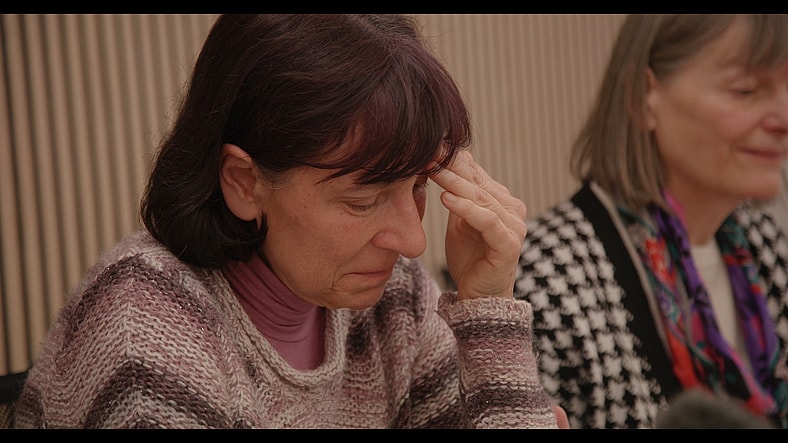
The biggest strength of Nuns vs The Vatican lies in its themes of sisterhood. It was important to Luciano that her subjects confront old wounds and speak their truths, but it was equally critical to find joy and resilience in shared rituals, like cooking, picking flowers or laughing and being together.
“Not even abuse could take that away from them,” she says. “That’s true beauty, because it comes from the light they have.”
Getting to that light was a tough process made possible by the nearly all-women executive producing team. Luciano’s husband, Filippo Piscopo, served as producer, and she says he was essential in negotiating access to certain subjects and institutions, although access was more about being in or out of closed circles rather than gender.
That lack of access yields powerful moments in the film, particularly in one scene when a local reporter tries to engage Rupnik at the airport to get his side of the story. The decision to include that moment in the film was to highlight silence without diminishing the women’s voices.
“Silence becomes a very dangerous instrument or tool in their hands,” Luciano says. “Gloria herself wrote Rupnik to talk to him and he never wrote back or engaged. It was very important to show that the effort was made.”
The result is an intimate story about women coming together, finding their voices, and fighting for agency within a centuries-old institution. It’s as much a story of strength as it is a story of community and resilience. What it doesn’t have is a firm ending, given that Rupnik is currently facing a Vatican tribunal after 20 women alleged sexual, spiritual or psychological abuse dating as far back as the 1990s.
For now, there is some solace in the fact that Rupnik’s mosaics (art allegedly inspired by this abuse), have been removed from the Vatican and the tribunal is happening. For a while, these women didn’t know if it ever would.
“Through this feature form I wanted to give each character time to become, in a way, universal for what they represent to the viewer,” says Luciano. “Of course, we’re open to doing something with the developments since we’re expecting developments to come.”
Nuns vs The Vatican is now playing on the film festival circuit after premiering at the Toronto International Film Festival.
Main image: Nuns vs The Vatican, courtesy of TIFF.