
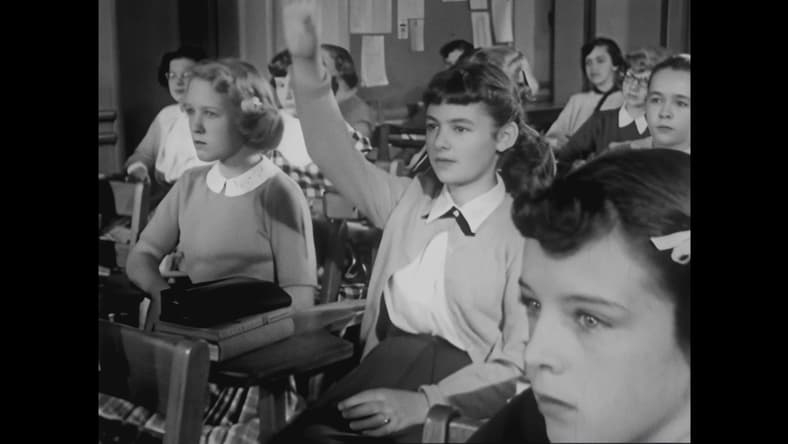
Filmmaker Jan Krawitz’s fascinating documentary “Nice Girls Don’t Ask” interrogates instructional films of the 1950s that told a generation of girls, often as an afterthought, to be quiet.
Some of the films were about how young women should behave. But Krawitz noticed that even films about seemingly gender-neutral topics — electricity, for example — somehow managed to be strikingly sexist.
Watching them with seven decades of hindsight, Krawitz was struck by how much they espoused the values of the modern conservative “tradwife” movement, which encourages a return to a 1950s idealization of domestic life.
“Nice Girls Don’t Ask” is one of the highlights of the Sedona International Film Festival, where the film plays Thursday and Saturday, paired with the documentary feature Mozart’s Sister.
Krawitz is an acclaimed, prolific filmmaker and professor emerita for Stanford University’s Department of Art & Art History. In a way, “Nice Girls Don’t Ask” owes its existence to two of her previous films: 1990’s “Mirror Mirror,” which examines the relationship between a woman’s body image and the quest for an idealized female form, and 1996’s “In Harm’s Way,” which explores assumptions about fear, safety, and control instilled in the children of the late 1950s.
Both borrowed from the 1950s instructional movies, which can be unintentionally funny in their dated ideas — but also dense, misguided, and cruel. There’s no telling how many harmful or just weird ideas they caused some children of the 1950s to internalize.
We asked Krawitz about accessing a “treasure trove” of these films, giving 1950s filmmakers too much credit, and whether tradwife culture feels like a real thing.
Jan Krawitz on ‘Nice Girls Don’t Ask’ and the Tradwife Movement
MovieMaker: How did you come upon all of these instructional films and realize they could be the basis of your short film?
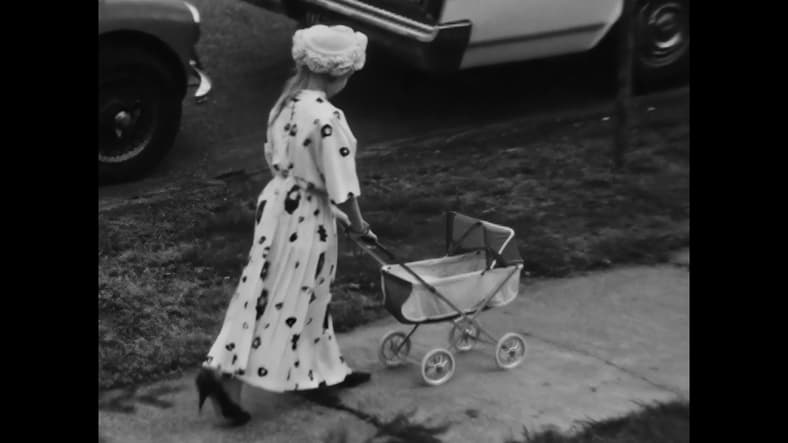
Jan Krawitz: The initial concept was to work only with toy ads that came into my possession in the 1990s when I was making my short film, “In Harm’s Way.” I planned to subvert the strict gender messaging embedded in both the toys and the ads. However, it quickly became clear that this idea was a bit too one-dimensional. The vestige of that concept remains as a prologue in “Nice Girls Don’t Ask.”
I was familiar with the instructional films used in “Nice Girls Don’t Ask” as I had used a bit of this material in “Mirror Mirror” and “In Harm’s Way.” In the years since, a treasure trove of these films have been uploaded by Prelinger Films and were available online. My research started there — viewing and transcribing over 100 of these films while my ideas for the film percolated.
MovieMaker: Who commissioned these films? They’re like propaganda in many ways.
Jan Krawitz: Several production companies had the idea to produce and market “social guidance” films in the post-WWII years. The baby boom was taking off and legions of veterans were starting families. Rather than being commissioned, the genre emerged as a marketing opportunity by Coronet Films and other companies.
The social guidance films initially focused on dating behavior, etiquette, career possibilities, and other tips for helping teenagers become well-adjusted adults in a stable society. The films eventually expanded to the topics of marriage and children. The films were specifically targeted for the 1950s American white, middle-class, as evidenced by the population represented in the films. They were shown in schools, churches, and community groups.
The biggest discovery in my archival research was the insidious gender-messaging that was present even in films that had a completely different goal. For example, in films about safety in the home or “the flow of electricity,” girls were relegated to the role of observer, while their brothers worked with dad to figure things out. Wives in some of the later films demonstrate this same helpless behavior. Young girls watching these films in their 1950s classroom would understandably absorb this subtle messaging.
MovieMaker: Some of these films clearly want girls and women to just be silent servants, but others have brief moments of surprising honesty and empathy, especially for married women who’ve had to give up their own dreams for husbands who may have less professional promise than they do. Did it seem like the filmmakers were trying to sneak some reality into these instructional films?
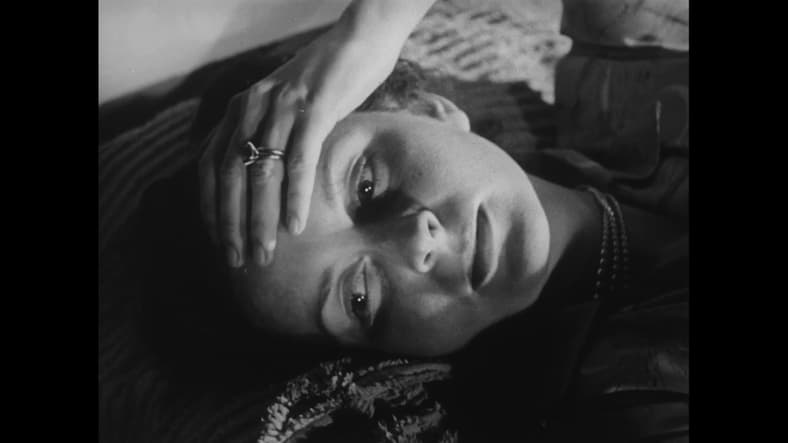
Jan Krawitz: I’m guessing your perspective may give a bit more credit to the instructional filmmakers than is warranted. In the scene where the married woman (a math major in college who gave up her job after marriage in deference to the prevailing norms) finds a way to exercise her brain, it is only in service to her husband within the confines of the marriage.
Occasionally, the films will offer a palliative like that, but I there is also the scene in which the husband rails against his working wife, claiming that her job is more important to her than the marriage. This excerpt (highly edited, of course) is from a film about marriage happiness, suggesting that the marriage would be harmonious if the wife stopped working.
MovieMaker: It’s very darkly funny that you slide in the modern-day male “traditional marriage” proponent near the end without comment — he sounds like someone for whom nothing has changed, and it really is hard to see any difference between what he says and what these instructional films said decades ago. Why did you opt not to identify him?
Jan Krawitz: I felt it was necessary to include a contemporary scene that suggests, “plus ça change, plus c’est la même chose.” (The more things change, the more they stay the same). The male speaker at the podium is representative of a resurgent mindset that regards feminism as a historical mistake.
He is the graduation speaker at a Catholic college and his words were met with sustained applause in 2024, suggesting that there is still a receptive audience for what I perceive to be regressive ideas. The auditorium that is intercut with his speech is populated by 1950s girls— to make the point that you articulated in your question.
Had I identified him, it may have allowed the audience to more readily dismiss his words as belonging only to him — rather than to a burgeoning movement that valorizes traditional roles for both men and women.
MovieMaker: Do you think the “traditional marriage” some modern-day conservatives embrace ever really existed? Or was it created for TV and films like these? And do you think there’s really been an uptick in “trad wives,” or are they just performing for engagement?
Jan Krawitz: I do believe the “traditional marriage” existed in the post-war years, both in actuality and as exemplified in media (Leave it to Beaver, The Donna Reed Show, et cetera.) My mother was a ’50s mom — a math major in college who quit her job after marrying in 1948. I came of age on the cusp of feminism and therefore, through fortunate timing, was able to pursue a career as a filmmaker.
Although there are now many more opportunities available to women than in the 50s, recent times have seen a resurgence in traditional roles for women — Project 2025; the Natalist movement which promotes bigger families; the online female influencers who promote marriage, children, and often home-schooling; and the proliferation of “tradwives” on TikTok who tout the virtues of cooking and cleaning at home as a full-time occupation.
I never thought to ask my mother before she died if she was frustrated by the societal norms that relegated her to the role of wife and mother — recognizing, of course, that our family could get by with one income.
Main image: One of the 1950s instructional videos featured in “Nice Girls Don’t Ask,” by director Jan Krawitz
You can read more of our Sedona International Film Festival coverage here.