
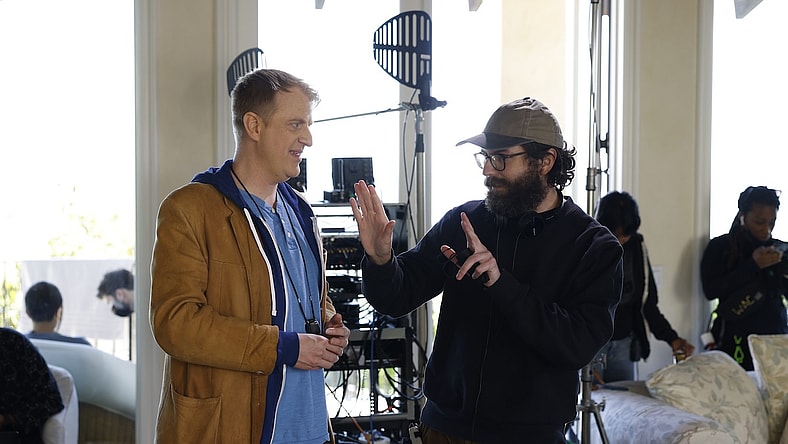
Morgan Evans is the director and co-writer of the indie mockumentary Micro Budget, a sharp and very funny comedy about DIY filmmaking. The film stars co-writer Patrick Noth and features guest appearances by such comedy stars as Maria Bamford and Saturday Night Live veterans Bobby Moynihan and Chris Parnell — as well as a very famous person who makes a jaw-dropping cameo. In our latest edition of Films at Any Budget, Evans discusses the real budget for Micro Budget. —M.M.
At the beginning of this journey, it was imparted to me time and time again that I should under no circumstances ever disclose the real budget of my film. But now having learned that nobody really knows anything at all… this movie cost $235,000.
I did have a bit of savings at the time of pre-production. I had an extremely lucky break during the pandemic and started writing over at Warner Bros., working on about four films for them back-to-back-to-back-to-back. Two got greenlights. One survived and was released (Merry Little Batman) and the other fell the way of Batgirl/Coyote Vs. Acme. The only good news about an in-production film getting shelved for tax reasons was, I had already been paid to helm the script and the money had already hit my account. So, having money for the first time in my life, I thought it was either time to buy a house or make a movie. I chose the movie. Whoops!
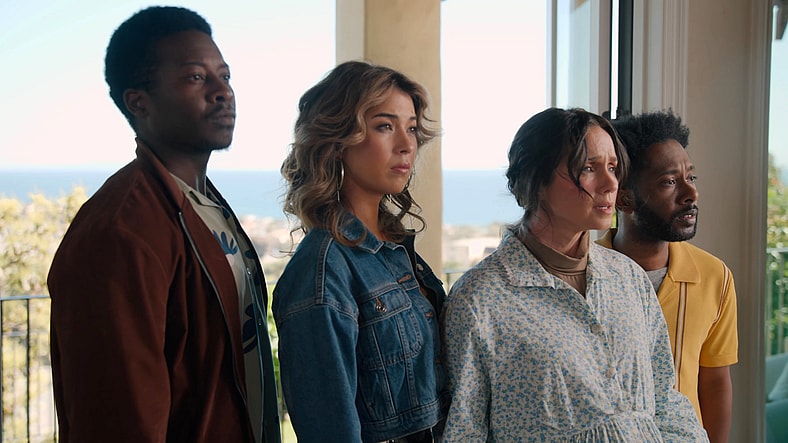
Courtesy of Factor 25.
The amount of the budget that I couldn’t cover out of my own savings was cobbled together through some credit cards I took out under my S-Corp, and a pretty predatory loan. Like many others in this business, I had read Robert Rodriguez’s book Rebel Without A Crew and watched Kevin Smith’s (really great) tour videos, romanticizing the idea of donating plasma or selling your comic book collection to make a movie. I’m not sure what happened, but someone, somewhere, failed to let me know it was no longer the 1990s and the idea of a return on those investments had evaporated somewhere between Beanie Babies and the release of Madame Web.
One thing we did not want to do, since all of us on the team are working film and TV professionals in Los Angeles, was to follow the “get your friends together on weekends and make a movie without paying anyone” model of indie filmmaking. We all understand why that is financially necessary for most projects, and helps directors break even in the current horrific sales climate where MGs are either tiny or non-existent. But that simply wasn’t an option with the crew and actors we wanted to use.
So we did things “the right way” as much as we could and followed all the rules, which meant having real insurance and pulling proper permits for the locations, doing a script clearance report and legal review, and putting people on payroll unless they had a loan-out company, thereby paying into everyone’s unemployment and social security, et cetera. We also had to spend a little money on everyone’s required Covid testing (yeah, it was still a thing in 2023).
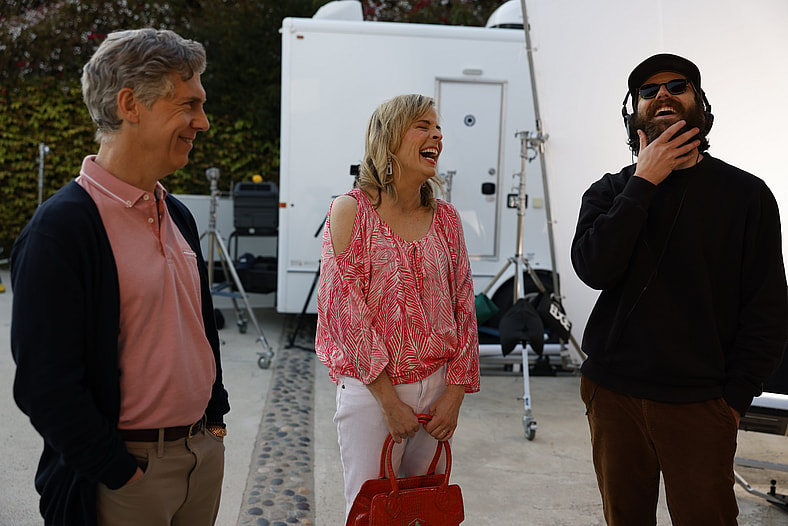
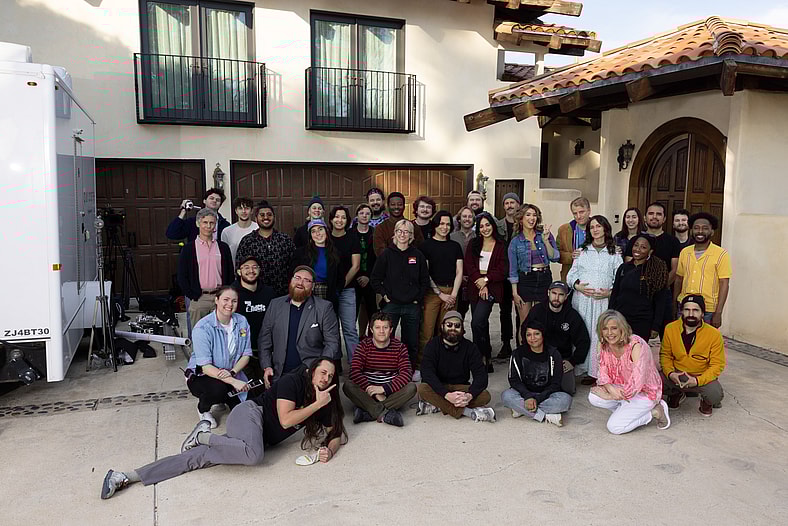
The way we stretched the money was, in many regards, rooted in egalitarianism. Not only did we want to pay everyone well enough, but we also wanted it to be fair across departments. The bonus there is that paying everyone the same flat rate really helps with negotiations. We paid every department head the same flat rate. Each department head got to hire one or two people as part of their team if needed, and those people were all paid a similar, but slightly smaller, flat rate. All in all we spent $85,000 on the crew for a 13-day shoot.
The cast was the same deal, everyone at the same SAG minimum day rates across the board. This was crucial, in my opinion, to landing some of the heavy hitters we got to be in the movie. The agencies just seemed friendlier and more willing to help us once they knew EVERYONE was making the exact same amount. There is a huge surprise uncredited celebrity cameo in the film and yes, that person also got paid the same SAG minimum rate, and they were a total pleasure to work with!
Securing our talent came down to the MFN payment factor, combined with the strength of our script and pitch deck, and having a few crucial friends like Jon Gabrus and Neil Casey on board already when we started reaching out to reps for bigger-name people like Bobby Moynihan, Chris Parnell and Maria Bamford. It probably also helped that we were offering people badly needed SAG days right before everyone knew we were about to go into a prolonged strike. The total cost for paying the cast was $50,000.
The main house we shot in belonged to my fiancee’s family. They cut us an incredible deal, but we still wanted to pay so it wouldn’t seem like the type of favor anyone could just wiggle out of. Obviously you want to save money everywhere you can, but sometimes a slight waft of transactionality can create a feeling called “legitimacy.” Without that house, I don’t think we could’ve made this movie.
It really helped, too, that it was located in Malibu and their film permitting is very straightforward and affordable. Location budget, including permit, meals, honeywagon (the home was on a septic system so we needed our own bathrooms), trash, cleanup, and the house totaled out to $30,000.
Other odds and ends were about $7,000 on wardrobe and props/set dressing, $10,000 on legal, clearances and accounting, and then about $17,000 on all gear rentals and trucking after a lot of discounts from friends at various rental houses. I purchased the Sony FX6 cameras we shot on rather than renting, and then sold them right after the movie.
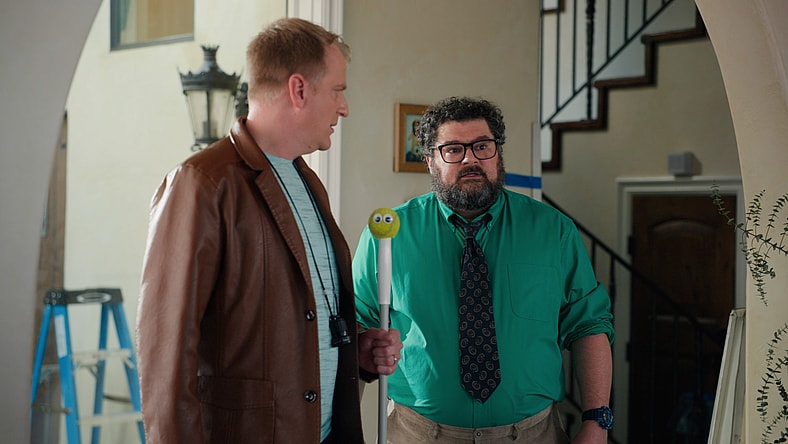
We saved money in other ways, too. I don’t exactly know who figured this out or when, but we started emailing companies for free products and they just started sending them. By the time I rolled up on set, there were literal pallets of sodas, alcohol, board games, chips, cleaning products, and more. I’m still working my way through the mezcals. I had reached out to a hard-drive company and gotten some free drives from them, too– which was super helpful for post. We also showed the hard drives on camera in scenes where the director character, Terry, is editing the movie and looking at dailies.
By the time we got to post, we had gotten our bond back from SAG but I was BROKE as a JOKE. Two back-to-back strikes had completely derailed my financial future and we still had a movie to release. I had no clue how I was going to pay for the DCP, the tax bill on the LLC, the accounting fees, a potential publicist, subtitles, festival submission fees, et cetera.
So we did what we had never really wanted to do, and launched a Kickstarter. It was a lot of hard work, begging people for money, but we raised about $30,000! It was truly a lifesaver, and I personally owe every backer a favor. If one of them knocked on my door and asked me to drive them to the airport, I think I would absolutely do it. We could not have finished this movie without this last-minute gap financing provided by wonderful supporters. Our total for post production, including music, was $36,000.
So that brings us to now. Have I made a dime from Micro Budget? Nope. Not yet. But time will tell. The short answer is… probably not much.
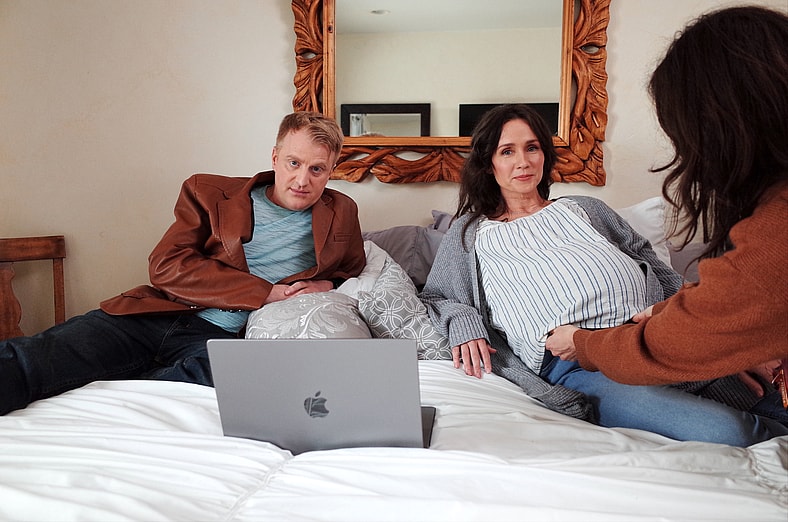
Am I still in debt? You betcha. Will I be for the foreseeable future? Oh yeah. But I don’t tell you this to discourage you. Far from it. The real question here, and the only question that really matters is — do I regret it?
The answer to that is a huge “fuck no.” Thanks to Micro Budget I have traveled the world, attended great festivals, and gotten to see something me and a bunch of friends made absolutely crush in packed houses.
I’ve met awesome people in towns I never thought I’d go to, become friends with tons of other amazing artists and filmmakers who are all in the same boat as me, and when my head hits the pillow at night, before I drift off to sleep, I’m not thinking about the $235,000 dollars.
I’m thinking about the fact that I made a fucking movie.
Micro Budget is available on video on demand on March 10, from Factory 25.