

Not long ago, Michelle West asked her Aunt Carol for some family stories. What her aunt then told her became the basis for West’s fascinating new short film “Lineage,” which is set in a more harrowing version of 1933 than we normally see on film, and illustrates how much people, and especially women, must hide their secrets to survive.
The short, which just played the Poppy Jasper International Film Festival, builds mystery and power as we realize the characters’ capacity for compartmentalization: Secrets are locked away in a trunk, never meant to be opened. West, who wrote and directed the film, also plays a mother struggling to hold her family together during in the grimmest days of the Great Depression.
References to The Wonderful Wizard of Oz (the book, not the movie, which hadn’t come out yet) add to the sense of earthy eeriness that pervades the short. “Lineage,” like L. Frank Baum’s novel, has a curious blend of sadness and hope that is hard to shake. By the end, it turns out to be an entirely different film than the one you may have thought you were watching at the beginning.
We asked West about the silencing of 1930s filmmakers, gaining experience in a wide range of film jobs, and getting the past right.
Michelle West on Making ‘Lineage’
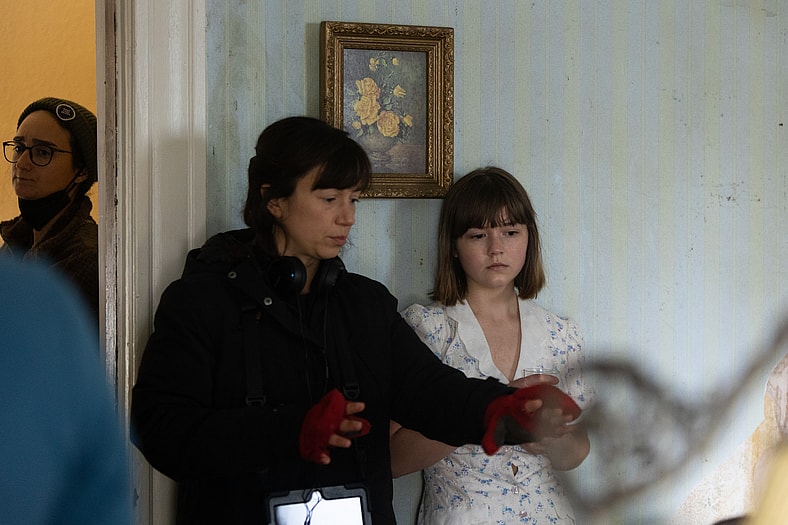
MovieMaker: Can you talk at all about the events that inspired this?
Michelle West: About six years ago at a family reunion, I asked my Aunt Carol to share family stories with me while everyone else went sightseeing. I have a disjointed family spread far and wide, and I’d never learned much about my family tree. She agreed, and while knitting, she told me how my grandparents met, what they did for a living, and the challenging home lives that inspired them to marry as teenagers and take on the world together.
Aunt Carol also told me something Nana only shared closer to her death — that as a young girl, Nana found a fetus in a trunk in the living room. The rumors declared Nana’s mother as superstitious and using black magic to get pregnant with a boy… You know, the standard patriarchal story: Women are crazy and only boys have value.
But as Aunt Carol shared more familial stories about abortions, miscarriages, alcoholism, poverty, gang affiliations, gambling, and infidelity, I started connecting the dots. The fetus in the trunk wasn’t about conjuring blessings, it was about burying secrets. Secrets too painful to fully let go of. Secrets that the women in my family had been forced to carry in silence for generations. So, I decided to break that cycle.
Ultimately, Lineage is a series of true events woven into a single fictional narrative to honor the stories of forgotten women not only in my family, but in all of ours.
MovieMaker: Because so many Hays Code-era movies were censored, we sometimes get a clean-cut view of the past, and especially the 1930s. But this feels like a really honest take on how mean life could be during the Depression. Do you feel that you told the truth about life at that time more honestly than the flms of the era could?
Michelle West: The power players in the 1930s who censored and skewed media toward Christian ideals after industry consolidation (sound familiar?) not only sanitized content, but also brought an end to women’s filmmaking for decades. Alice Guy Blaché, Lois Weber, and Mae West, for example, were profitable pioneers of cinema until a male studio head deemed them inappropriate and ended their careers.
Because of this, we missed out on so many vital stories by and about women.
Unfortunately, this issue isn’t confined to the Hays Code era. Only 8% of feature-length films are directed by women today. The 2022 documentary Brainwashed: Sex, Camera, Power by Nina Menkes demonstrates in great detail how even modern films frame women and women’s experiences in ways that influence pay disparity and misogyny in our culture today.
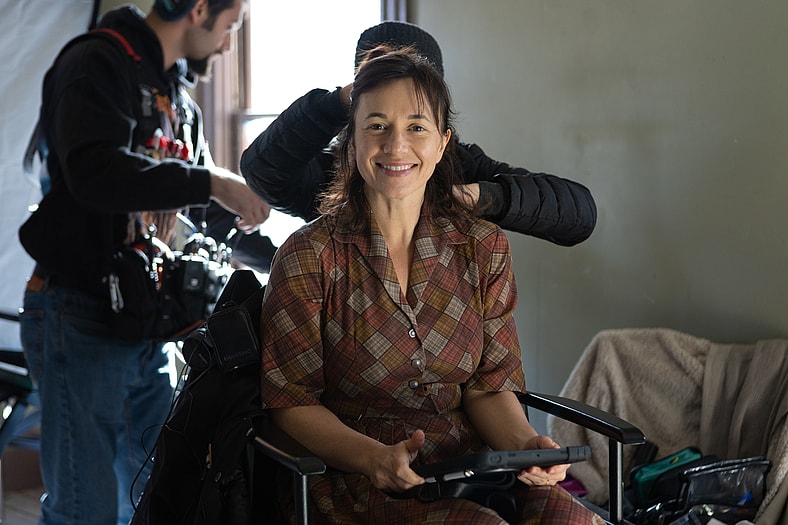
Much more work remains to ensure stories representing all races, genders, and orientations are told in the present, regardless of the time period they depict. I don’t want to wait 90 years before the stories of today are told honestly.
MovieMaker: It was also striking how relevant so many elements of this film felt to 2026 — the male gambling epidemic, predatory behavior, the restrictions on bodily autonomy. Did you want it to be an allegory for today? To recover a story from the 1930s? Or to make it timeless?
Michelle West: As a segue from the last question, it’s pretty wild to reflect on how far we’ve come in the last century regarding equality, technology, and awareness — all under the guise of improving life and overall happiness. Yet, in so many ways, we struggle to face our demons, so the past repeats itself.
Thankfully, art is a powerful mirror. The goal is for films like “Lineage” is to bring awareness to areas of our culture that still need healing, and to inspire individuals to choose it for themselves.
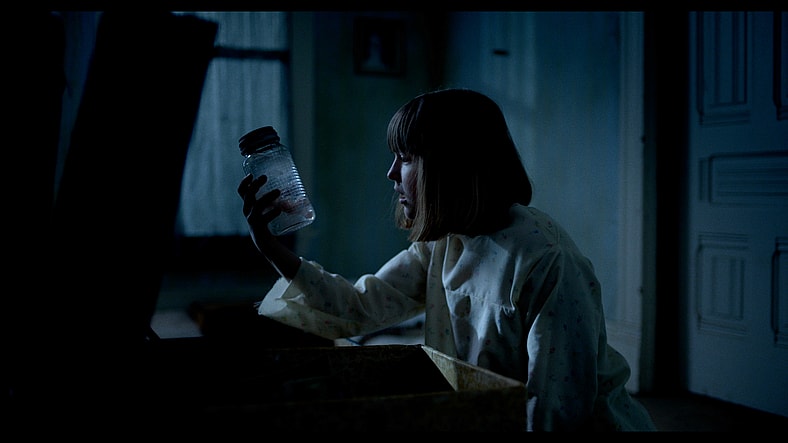
MovieMaker: I was really impressed by how skillfully you set up the ending, with the mysterious contents of the trunk — notably the jar and the $33. Can you talk about your writing process and influences?
Michelle West: In terms of process, I find writing to be basically impossible — like seeing behind my eyes. The resistance to sit down and uncover what is lurking beneath the surface of an idea is absolutely maddening. But I like the challenge of making something from nothing, so I find different ways to trick myself into doing it.
Once I land on an idea, I usually first re-read Steven Pressfield’s The War of Art to remind myself that I’m not the only one who struggles with writing and that the obstacles can be overcome. I’ll pull different strategies from that book depending on how I’m feeling. I also like to just free-write different scenes that come to mind in no particular order. Then I try to create some sort of order.
Then, over a period of time, I write many bad drafts, beg friends to read them for feedback, and pray they’ll remain friends with me. This happens repeatedly until I get a decent draft and light starts to shine through the cracks. That’s when writing becomes a little fun. Jane Campion was a big influence on the writing style of “Lineage.”
MovieMaker: You worked in production before becoming a director. What did you do in production, and how did it make you a better director? How does acting inform your directing?
Michelle West: Before directing, I worked as an assistant director, production manager, and physical producer for over a decade. I was hired by both studios and independent production companies, including Disney, Fox, Universal, The Duplass Brothers, and Plan B, for projects ranging from feature films to branded content to episodic series.
This time in production was essentially my film school; I learned what every crew member does, how to safely execute ideas, and how to practically realize what’s on the page. Most importantly, it gave me great instincts for the schedule and budget.
What production didn’t offer was an understanding of what happens in front of the camera, so I took acting classes and performed in some smaller projects to learn how to fully embody a character and surrender to another perspective. In my opinion, acting is an incredibly brave and vulnerable artform, and I have great sensitivity for that when directing.
MovieMaker: This is the rare short that feels like it has enough detail to be a feature — is that a goal, or is the story told as you want it told?
Michelle West: I think “Lineage” always wanted to be a feature, actually. If I had kept everything from the 25-page script in the film, the edit would have been 35 minutes long, which wasn’t the short I intended to make. I actually toyed with the idea of extending the script and adding a few pickup days to make it a 55-minute feature, but that wasn’t the feature I wanted to make, either.
So I worked with my amazing editor, Troy Takaki, to pare down the edit to just the core story between the women in the family, leaving a lot of footage on the cutting room floor. It really hurt to lose so much amazing work, but sometimes the best lessons are the most painful.
I’d still love to make the full feature with proper planning, and it’s definitely on the list of options when someone asks, “What else do you have?,” but I’m primarily shifting focus to new creative that will allow me to dig into something fresh.
MovieMaker: Finally, any personal connection to Poppy Jasper or thoughts on the film’s relevance to the festival?
Michelle West: This is my second year screening a film at Poppy Jasper and I love their commitment to connection, diversity of art, community building, and highlighting films that could easily get overlooked at large scale festivals. Mattie Scariot and her team do an incredible job ensuring there is an event for everyone and curating programs that are a true, honest representation of excellent storytelling from all backgrounds. It’s been such an honor to include “Lineage” in that.
MovieMaker: Also, not a question but incredibly cool references to The Wonderful Wizard of Oz.There’s something so creepy about the book, and I love how you worked it in.
Michelle West: Thank you so much! Wicked hit theaters just as “Lineage” started screening last year so it was very kismet. I also think the book has a lot more creepy in it than the movies have ever captured.
“Lineage” just played the Poppy Jasper International Film Festival. You can read more of our film festival coverage here.
Main image: Christopher Callen as Nana Cooley, left, and Cailin Peluso as Betty Cooley in “Lineage.” Hazel Mae Pictures