
Twin brothers Wyatt and Gannon Wheeler once traveled the world, seeking adventures and new experiences. But their time together ended on October 25, 2022, when Wyatt died of a seizure as Gannon tried desperately to save his twin. Wyatt was just 27, and attending business school.
Trying to piece together what had killed Wyatt, his mother, Patti Wheeler, found that he had been taking kratom, a substance from a tree native to Southeast Asia. She remembers him telling her it was just a supplement.
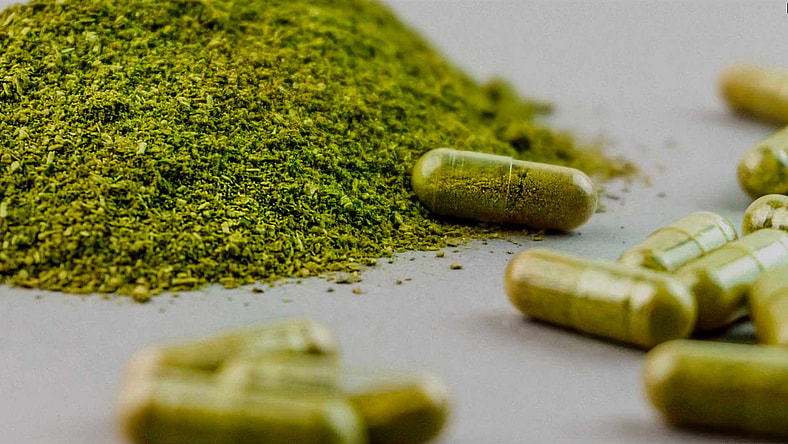
Kratom is easy to get: A compound within it called 7-OH, or 7-hydroxymitragynine, is used to make various products sold in vape shops, gas stations and elsewhere, and millions of Americans use it as a stimulant, or to relieve pain, perhaps as an alternative to opioids.
Kratom is not regulated by the Drug Enforcement Agency or the Food and Drug Administration. The DEA says that its leaves produce stimulant effects in low doses and sedative effects in high doses, and that it “can lead to psychotic symptoms, and psychological and physiological dependence.” The FDA says that it “is not lawfully marketed in the U.S. as a drug product, a dietary supplement, or a food additive in conventional food” and warns against its use for any kind of medical treatment until agency scientists can better evaluate it.
Health Secretary Robert F. Kennedy Jr. announced a plan last summer to restrict access to some kratom products, citing safety concerns.
But the Holistic Alternative Recovery Trust, which represents 7-OH makers and consumers, has argued that the compound does not meet the statutory criteria for prohibition, and has value as “a potential harm-reduction tool that warrants responsible regulation, not prohibition.”
In remembrance of Wyatt, Patti Wheeler sought to educate the public about kratom, and enlisted an old friend — producer Joanne Rubino, who years before had worked with her and her sons on a planned TV project based on a series of books about their globetrotting adventures.
Rubino put Wheeler in contact with filmmaking twins Jamie and Jason Neese, certain that they would feel an affinity for a mother of twins. Patti Wheeler hit it off quickly with the filmmakers, whose extensive credits include co-executive producing the Emmy-nominated Netflix series The Umbrella Academy.
Patti Wheeler is the executive producer of the resulting documentary, Kratom: Side Effects May Include, which plays Sunday at Dances With Films New York.
“Being a parent is the most important and amazing role in one’s lifetime. You do everything to keep them safe and then they walk into a gas station and buy a little bottle on a shelf, and are gone at 27,” Patti Wheeler said in a statement. “This unthinkable tragedy is a deep pain that will never go away and the driving force behind my determination to bring change, justice and do something that saves lives.”
Joanne Rubino produced the doc, and emailed with us about the future of kratom, and conducting the painful interviews for the documentary, which is now seeking distribution.
Joanne Rubino on Making Kratom: Side Effects May Include
MovieMaker: I understand that Patti wanted to make this film to spare others from what she’s experienced. How does it affect the documentary when the executive producer blames kratom for such a terrible loss? Does it affect how the film presents kratom?
Joanne Rubino: We feel strongly that we gave everyone a voice and invited all sides to participate. It’s really more about the kratom industry and the lack of regulation and transparency as a whole.
MovieMaker: Some of the kratom users interviewed in the film — who advocate for its use – still support some kind of regulation. And you show that many users want to make sure it remains available. Do you want a ban on kratom, or just regulation?
Joanne Rubino: We do not want to ban kratom. We want the industry to take responsibility for the products, as they are selling to the tune of billions of dollars. We have spoken to numerous experts who all agree that it may have benefits but there needs to be much more research and reclassification of the products if they are currently calling it a food.
MovieMaker: How much faith do you have in RFK and legislators who are looking into greater regulation?
Joanne Rubino: We are pro any regulation, wherever it comes from. This is not a partisan issue. It’s a human issue, and we are hoping our film unifies and brings awareness to the masses and ultimately saves lives.
MovieMaker: Finally, what was the greatest challenge in making the film, and how did you overcome it?
Joanne Rubino: The greatest challenge of making the film was hearing these heartbreaking stories of sons, daughters, sisters, brothers — so many people whose lives have been lost or destroyed. And the numbers continue to climb.
You can read more of our Dances With Films New York coverage here.
Main image: Kratom: Side Effects May Include. Dances With Films.