
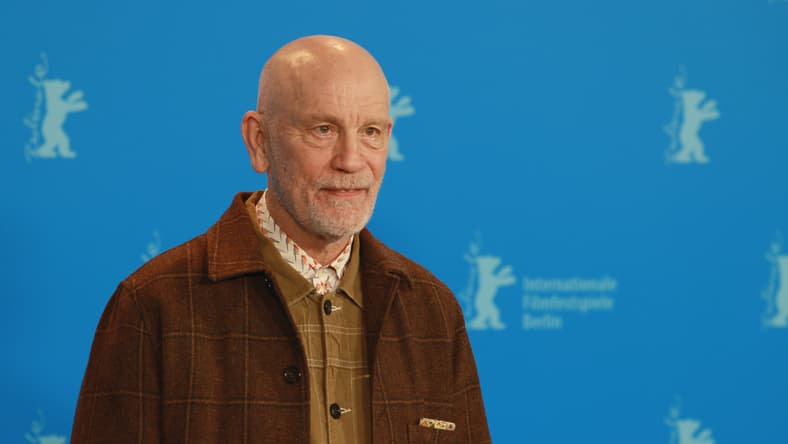
For a cinematography-minded audience Malkovich’s best work is not strange because it is loud. It is strange because it is legible. The camera can read it. The editor can shape it. The other actor can react to it. Few performances show that more clearly than Teddy KGB in Rounders, where a simple snack becomes a visual clue, a character study, and a lesson in how improvisation can sharpen dramatic form.
A Cookie, a Pause, and a Whole Camera Strategy
In Rounders, Teddy KGB’s cookie ritual is not a throwaway gag. It is blocking, prop work, and poker logic fused into one readable action. The scene lives in a world built around long attention spans. Poker is slow until it suddenly is not, and that makes food part of the atmosphere.
A real card room is often less about a formal meal than about staying in rhythm, staying seated, and letting small comforts stretch concentration. With this being said, the casino dining experience gamblers enjoy is still associated with the general vibe. In poker culture, quick bites and repeatable habits become part of the table’s social texture.
Malkovich turns that texture into screen language. Yes, Teddy eats Oreos, but he handles them with ceremony. He splits them, studies them, and lets the action hang long enough for the camera to tell us that the cookie matters. The move is funny, but it is also precise. It gives Teddy vanity, patience, playfulness, and menace in one stroke. Matt Damon’s player does not beat him by talking more. He beats him by seeing more.
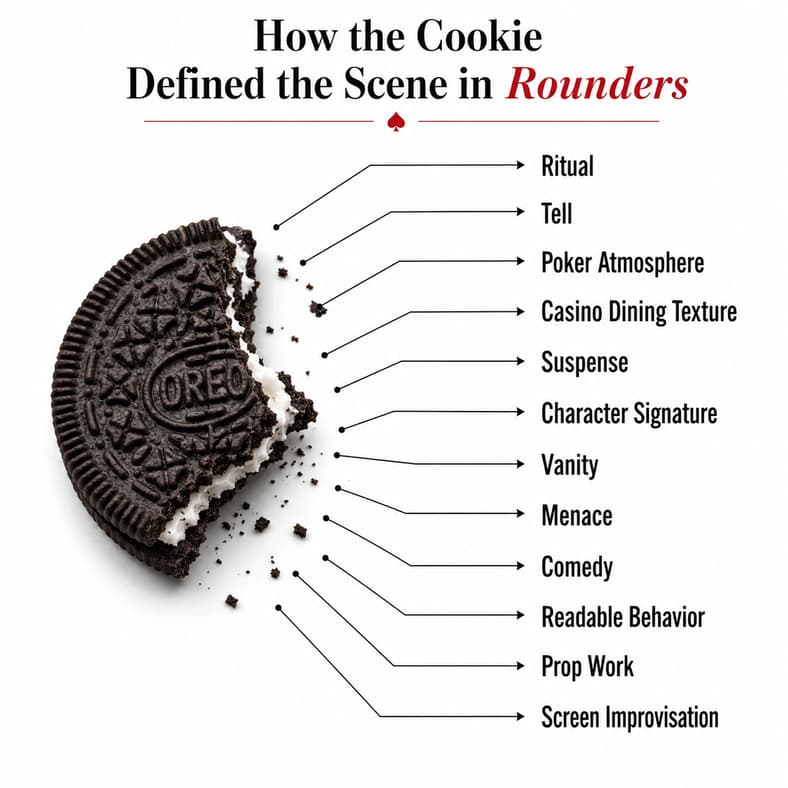
What makes the choice so strong is that it sits between realism and design. Today, even though casinos have changed their gaming formats significantly as many transition into online gaming, that same format keeps reminding us through themed games how important food and dining culture remain in the gaming context. Funny enough, social media is full of recipes inspired by casino games. Here is one: not an Oreo, but a cookie again.
Coming back to poker, in actual game, tells do grow out of repeated habits. A hand movement, a breathing pattern, a timing shift, or a snack routine can become readable over time. But real tells are usually less clean than movie tells. Malkovich solves that problem by giving the audience a detail that feels lived in while still being sharp enough for cinema. The behavior is broad enough to register in a close-up and specific enough to feel personal.
That is why the dining experience in casinos and its depiction in movies is beyond being decorative. As in many gambling spaces, eating is folded into pacing, mood, and table identity, Rounders uses that idea beautifully. And because Malkovich plays it as a ritual rather than a joke, the scene becomes a small masterclass in screen improvisation.
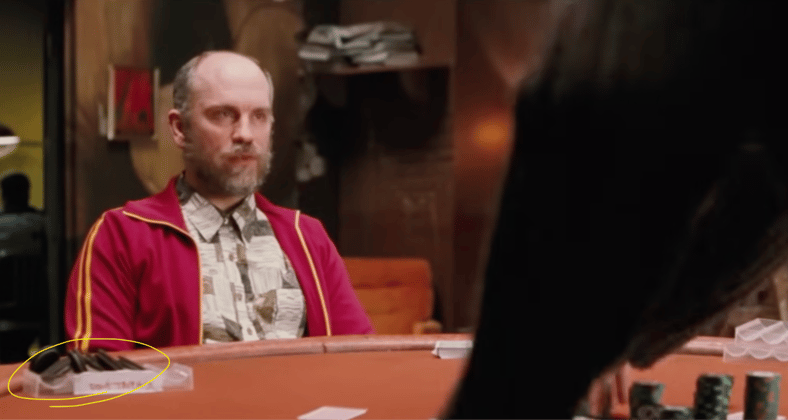
The scene from Rounders, where Malkovich is sitting at a casino table with poker chips and a pile of Oreos in front of him.
Screenshot from the movie.
Experimentation Only Works When the Frame Can Hold It
Malkovich is good at improvising, but not because he acts randomly. He is good because he can make strange choices that look interesting on camera.
One small acting detail has to work with:
- the camera,
- the lighting,
- the sound,
- the editing,
- and the other actors in the scene.
Malkovich seems to understand this naturally. As he told GQ in 2025, making a film often means you imagine many things that are not really there and then “do your little play.”
His odd choices still feel precise
That line gets close to his whole method. He imagines more than the script states, then compresses that extra life into a gesture the movie can actually use. That is why his strange details rarely feel like decoration. They give the lens a target. They give the editor a hinge. They give scene partners a rhythm to answer or resist.
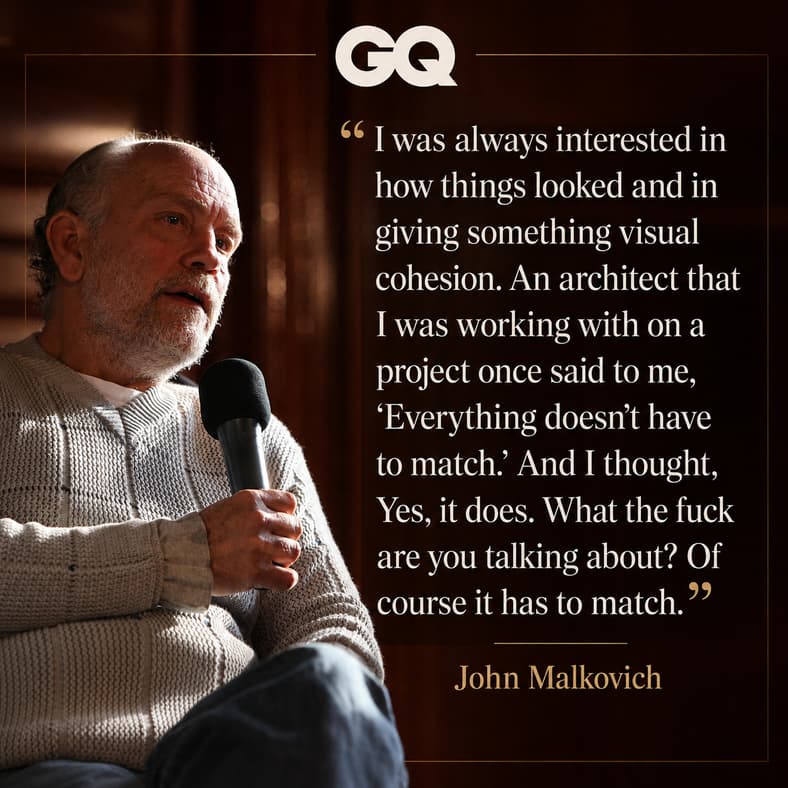
From the interview to the GQ magazine.
The quote visual was created by us, using a copyright-free image.
In Rounders, the cookie ritual gives the poker table a visual pulse. In the broader Malkovich body of work, similar choices keep appearing in different forms: a delayed response, a tilted cadence, a look that holds a beat too long. The point is never mere eccentricity. The point is clarity through oddness.
For filmmakers, improvisation works best when it produces something the frame can organize. Once the camera can see the habit clearly, the whole scene starts to breathe around it.
What Malkovich Is Doing Now
Well, he is still taking roles that need careful acting, strong body language, and good control on camera.
In Opus from 2025, he played Alfred Moretti, a missing pop star. In interviews, Malkovich talked about the work in a simple way: making the character feel real inside a made-up world. Even in a bigger, more dramatic role, Malkovich still used small details that the camera could catch.
He has also stayed active in films where posture, timing, and presence matter. In The Yellow Tie, he plays conductor Sergiu Celibidache. A movie about a conductor depends a lot on body movement: the hands, the pauses, the way a person shows thought before speaking.
There is one upcoming surprise from the actor, which will be released in November. We’re talking about Martin McDonagh’s Wild Horse Nine, filmed in France.
So yes, viewers can still expect Malkovich magic. The type of role may change, but the main pleasure is the same: he still knows how to turn one unexpected detail into the most memorable part of a scene.