
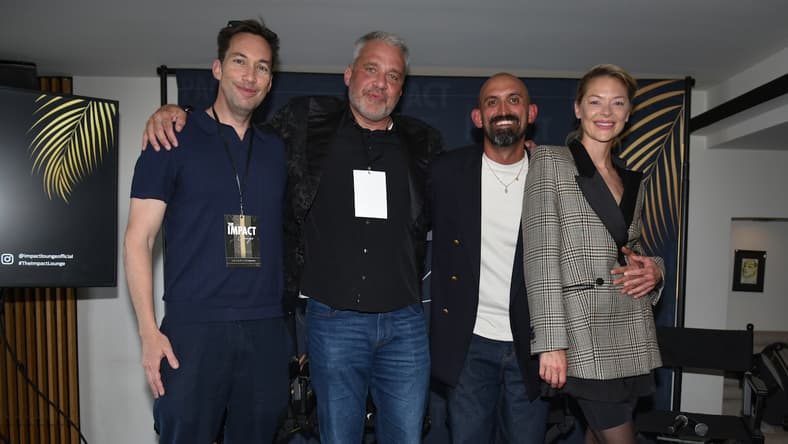
“Art disrupts,” Jaime King said MovieMaker‘s recent Cannes Film Festival panel on the Future of Film. “We are here to disrupt. … Great music disrupts, great people disrupt, art disrupts. You kind of like shake it up a bit, you know?”
The actress and filmmaker was one of three panelists — along with filmmaker Fernando Ferro and actor-filmmaker-attorney Don Worley — who joined us at The Impact Lounge for a frank, no-complaining talk about AI, verticals, and all the other disruptors changing moviemaking.
Their main message: Embrace change. Reject the things you may not like, such as AI-written scripts, and take advantage of the things you do.
All three panelists said that while many people criticize the current quality of verticals, they have the potential to be a great platform for telling stories.
“You can go out and do your own thing,” Worley said. “In the past, you couldn’t do that — you had to go have a meeting with a studio and wait for them to green light something for it to even happen. Now you can just make it yourself. So, embrace the change.”
Thank you to Jane Owen PR for coordinating the panel, The Impact Lounge for providing the stellar location, and to Bruno de Marquis for all of the lovely photos.
Here are seven more takeaways from our Impact Lounge panel on the future of film.
‘You Can Do Everything Yourself Now’
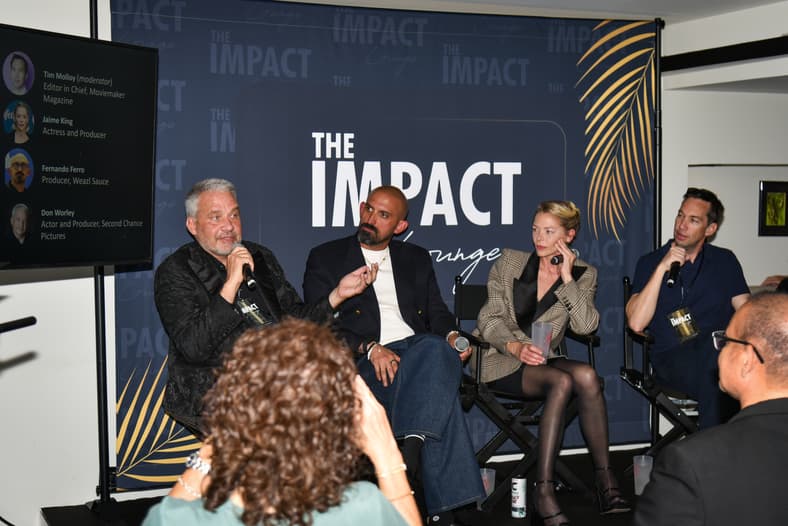
Don Worley noted that he was an actor and comedian before he became a lawyer. Once he achieved success in the legal field, he had the freedom to lead his own film and TV projects.
His company is called Second Chance Pictures because he himself is enjoying his second chance in the entertainment industry. He arrived at the prestigious Cannes film market with two projects for sale: A $30 million action movie, and a contained thrilled “that’s basically me in a hotel room for an hour and a half… we shot it ourselves in a sound stage south of Austin, Texas.”
He has also released a Discovery Channel show called Power of Attorney: Don Worley that his company is re-editing to turn into a vertical. And he made the film Pastor Shepherd, in which he stars as a televangelist. it’s also in the process of becoming a TV show.
Worley also produced a murder mystery vertical with Tara Reid and Vivica A. Fox, and is next working with A Star Is Born producer Billy Gerber on a vertical about musicians trying to make it in Hollywood.
Additionally, he just made the new comedy Mandate, about the male loneliness epidemic. He co-stars with Jon Lovitz.
“Do the best content that you can,” he advised. “Make something that’s good that you’re proud of. And if 15 people watch it, well, then you’re proud of those that those 15 people saw it. … But if you make something good, it’s going to rise to the top.”
Use What You Have
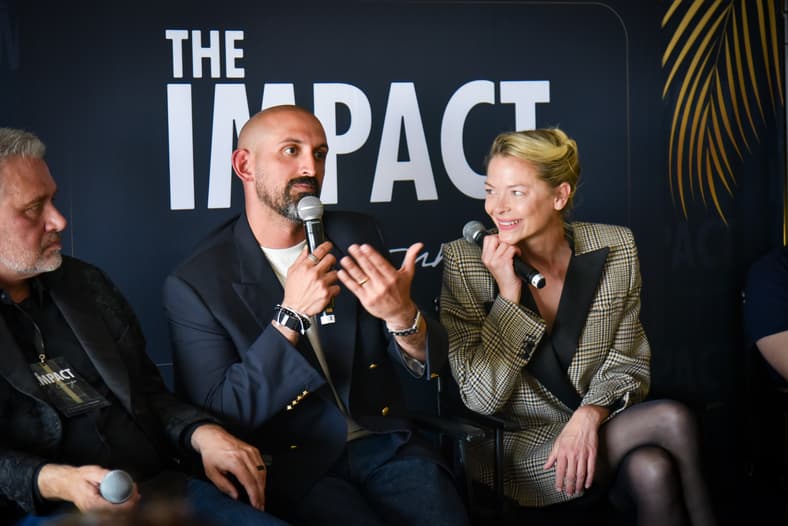
Fernando Ferro recounted how he started out making telenovelas in his his native Venezuela, and moved into film by shooting on tight budgets. A $3,000 project led to his being hired as the vice president of Content Strategy for the film financing and production company Foton Pictures, for which he oversaw films including Pink Skies Ahead, Echoboomers, and The Birthday Party.
His latest film is 52nd State, has Netflix co-founder Reed Hastings as a producer and investor. He also recently co-directed the short drama “Self Custody.”
Ferro said his career started to take off when he stopped waiting for Hollywood meetings and started working with the resources he had. Much of his success, he noted, “all started off a $3,000 movie.”
He also noted that starting off with smaller budgets gave him and his collaborators more control.
“It allowed us to get the business sense in a way that a lot of filmmakers, especially first-time filmmakers, don’t get — how to distribute a movie, how to market a movie, how to find an audience for a film. So I was done asking for permission to make movies,” Ferro said.
Create an Ecosystem of Fellow Artists
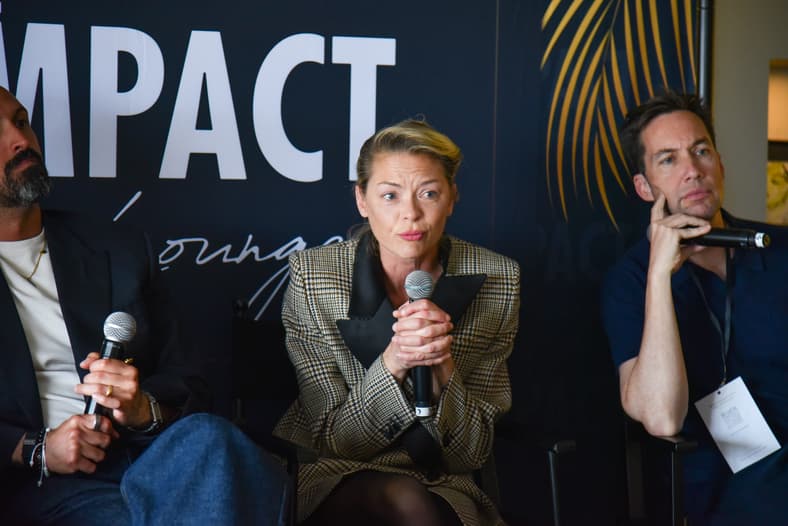
Jaime King rose to fame as a model when she was just in her teens. She quickly became an in-demand actress with films like Pearl Harbor, Sin City and My Bloody Valentine, and was mentored by people including George Lucas and producers Stacy Cramer and Peter Cramer, the latter of whom is now president of Universal Pictures.
She got an inside look at the making of many films besides her own, and applies that knowledge to producing. She just teamed up with her friend Natasha Lyonne to produce the new dark comedy thriller Darlene.
King said that with all the ups and downs of the industry, it’s crucial to find collaborators with whom you can press forward.
“I think the real key, and especially in the future of filmmaking, especially now, is to have an ecosystem in which the filmmakers are working together, because we’re already a collective consciousness, right? And so the abundance of artists sticking together is immeasurable, and when times get rough, and no one has money, and the market sucks, what’s gonna happen?
“Do you have a phone?” she asked rhetorically. “I could make a movie right now. And so I firmly believe that finding like minds, sticking with them, and creating a space where people have an opportunity to do something that they wouldn’t normally do, is the key.”
‘Time Is a Construct, Really’
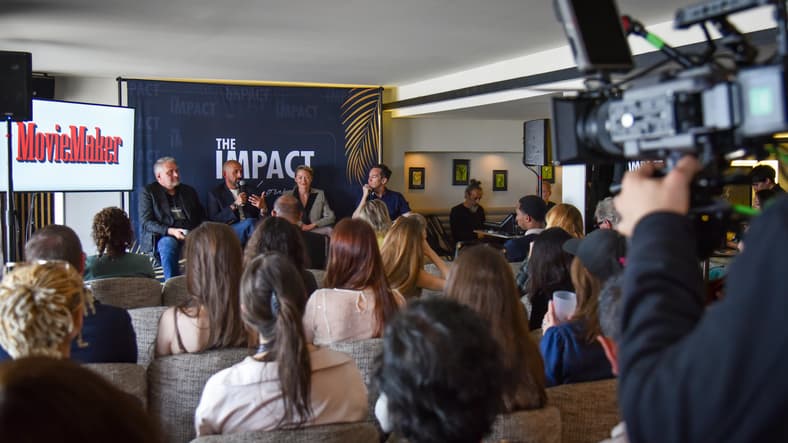
Fernando Ferro noted that he was in his 30s before he started making features, and urged the Impact Lounge audience: “Don’t limit yourself to a timetable or some sort of schedule of where you’re supposed to be,” he said.
Jaime King added: “Time is a construct, really.”
And Worley noted that he’s proof of the idea that you can go off into an entirely different career — in his case law — before returning to entertainment.
AI Has Its Benefits

Fernando Ferro said he’s observed that “Chat GPT” is a “f—ing lousy writer.” And Jaime King shared that she would “never put any of my ideas into Chat GPT or Claude,” because they’ll be harvested and plagiarized.
But Ferro noted that there are positive uses of AI, like adding subtitles and closed captioning, or setting pickup schedules.
And Don Worley noted that AI excels in cleaning up sound.
“In the past, if you had someone laugh during a take, you lost that take, and it was gone. Or if a train came by, or an airplane flew over,” he continued.
“And now AI can isolate that sound and take it out of the track, even if it’s on the same track. So if you have what the actor or actress feels like was a wonderful take, but you had a train whistle, the AI can pull out the train whistle. That’s one example of things I’ve been very impressed with.”
Verticals Can Be Great
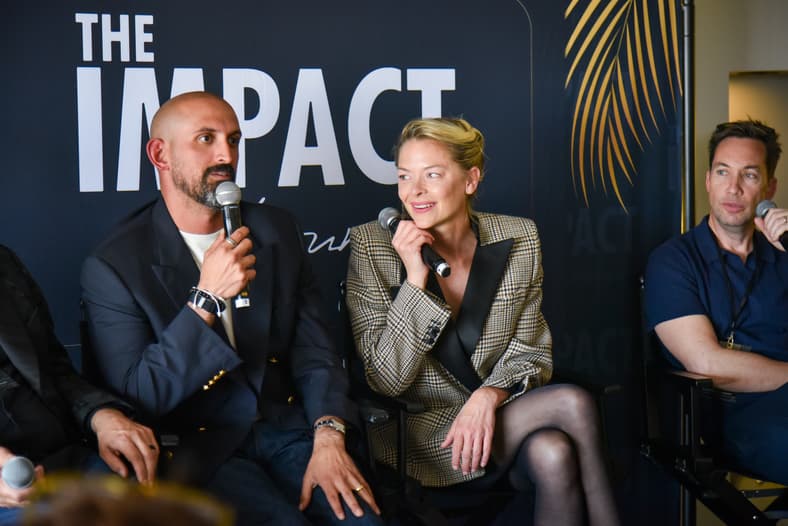
One audience member noted that current vertical platforms seem to favor speed — and perhaps slop — over quality.
But all the panelists encouraged creators to think ahead to the near future — and to consider that platforms may soon arise that want higher-quality shows.
Worley noted that the only rule for a vertical is that it needs to keep viewers engaged, just like the telenovelas that Ferro made early in his career.
“The key is making somebody want to watch the next episode. That’s it. That’s no different than TV or the novelas that he did as a young man,” Worley said. “Somebody has to want to watch the next one. So you don’t have to do a cliffhanger, but they do have to watch the next one, and that’s what pays for it.”
Ferro noted that once people were wary of digital, but that it opened doors for him and other filmmakers: “It allowed me and allowed a lot of my friends to get our first films going, and we were able to break through, because we considered ourselves — I mean, it’s all subjective — but pretty good at this. We have good stories, and we have a point of view, and we were able to break away from the mundane.”
‘It’s Like Alchemy’
Jaime King noted that filmmaking, and all storytelling, can pick up and reflect shared human experiences, even when people seem divided.
“Carrie Fisher once said, ‘Take your broken heart and turn it into art,'” King said.
“And for me, my personal experience, if it weren’t for storytelling and filmmaking and theater and art, I don’t know if I could be here now. I need a way to assimilate and absorb and transmute all of this that’s happening… We’re sensitive humans, so we’re picking up what other people are going through, even if there is a bias or disagreement… still, subconsciously we’re all being affected by this.
She concluded: “The process of writing and making these stories, and everything that goes into it, it’s like alchemy. It’s taking this pressure, pressure, pressure, pressure, and focusing it, and releasing it — and I know that when we do that, it all connects. It’s like our secret code, that’s not so secret.
“That’s how we can tell the truth of one another when they shut down every frequency or radio — there’s a way for us all to keep talking to each other.”
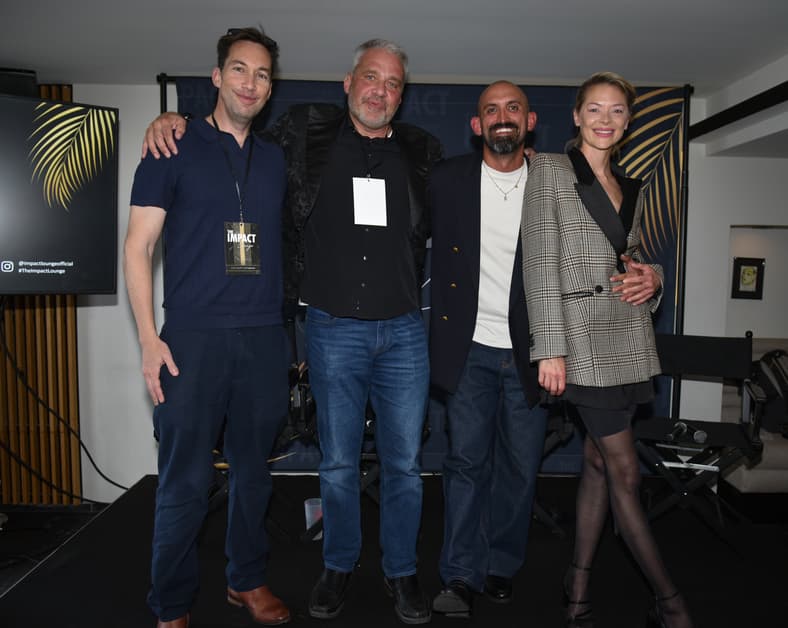
Main image: MovieMaker editor Tim Molloy and filmmakers Don Worley, Fernando Ferro and Jaime King, Photo by Bruno de Marquis.