
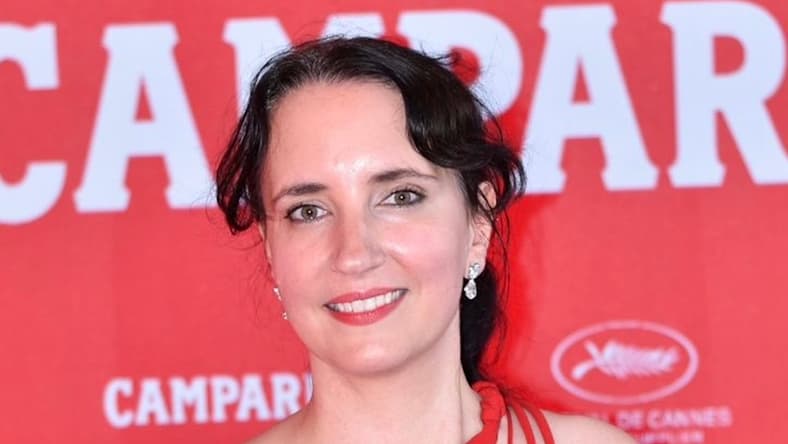
Publicist Jane Owen has spent over two decades turning festival appearances into career-defining moments, for filmmakers with premieres and for those without them. From Cannes to Tribeca to Venice to Toronto, the JOPR founder explains why showing up without a press strategy is the most expensive mistake you can make.—M.M.
There is a particular kind of silence that falls over a filmmaker who has just arrived at a major festival without representation.
It is not the hush of anticipation. It is the quiet of someone standing in a crowded room where everyone else seems to know the choreography: who to approach, which party actually matters, what conversation is really a pitch meeting wearing a cocktail dress, and realizing, with a sinking clarity, that they never learned the steps.
From Competition Halls to Global Marketplace
Film festivals were not always like this. When the Venice Film Festival launched in 1932, and when Cannes followed in 1946, the purpose was relatively narrow: gather the best films, screen them, give out prizes, go home.
For decades, the logic was straightforward. You went to a festival because you had a film in competition. If you didn’t, you had no particular reason to be there. The audience was cineastes and critics. The currency was artistic prestige. The business, such as it was, happened almost incidentally, a handshake in a hotel bar, a conversation after a screening that happened to lead somewhere.
That world began to shift in the 1980s and 1990s as Sundance, Toronto, and the expanding Cannes Marché du Film transformed festivals into genuine marketplaces. Suddenly there were sales agents and acquisition executives in the audience alongside the critics.
Suddenly a premiere was not just an artistic debut but a commercial event, a launching pad for distribution deals, foreign sales, and the kind of industry-wide attention that could determine a film’s entire financial life. The red carpet became a runway. The screening became a soft open. The festival became a business.
But even then, the assumption persisted that festivals were for people with films. If you were a producer between projects, a financier looking for opportunities, a technology company, a post-production house, an actor in between roles—you stayed home. The festival was a party for other people.
And then the pandemic changed everything.
Covid-19 scattered the film industry across the globe in ways that have never fully reversed. Production moved to new territories. Financing became more international, more fragmented, more dependent on relationships that span multiple time zones. The rise of remote work meant that the informal, in-person networks that had always held the industry together, the lunch meetings, the office drop-bys, the chance encounters at screenings, evaporated almost overnight.
When the festivals came back, they came back as something different: not just showcases for finished work, but as one of the last remaining spaces where the global film industry could actually be in the same room at the same time.
In a business that now stretches from Los Angeles to London to Lagos to Seoul, where a producer in Connecticut might be financing a film shooting in Eastern Europe with a sales agent based in Dubai, face-to-face meetings have become almost impossibly difficult to arrange outside the festival calendar.
Cannes, Tribeca, Venice, Toronto: These are no longer just film festivals. They are the industry’s living room. They are where the handshakes happen, where the trust gets built, where the deals that emails and Zoom calls could never quite close finally get done.
Which means the question of who belongs at a festival, and who needs a publicist when they get there, has fundamentally changed.
Enter: Jane Owen PR
I’ve watched this evolution unfold from the inside, and in some ways helped shape it.
I’m the CEO and founder of Jane Owen Public Relations, which I launched in 2011. It now operates out of Los Angeles, New York, London, Dubai, and Connecticut. JOPR has earned multiple Los Angeles Business Awards in public relations, and I’ve even been named Woman of the Year by the National Association of Professional Women.
But none of this is why my phone rings as often as it does, and why my schedule reads less like a professional itinerary and more like an intercontinental relay race: Cannes, then Tribeca, then the launch of a brand-new festival I’m executive producing in Hartford, Connecticut, then back across the Atlantic for Venice, then across again for Toronto.
I try to think of my work as a conductor describes a symphony — not as a series of separate engagements, but as movements in a single, deliberate composition.
Cannes: The Proving Ground

After I started the year with Sundance and SXSW, the yearly schedule continues on the Croisette in Cannes, which reflects how far festival PR has evolved beyond traditional film campaigns into something closer to full-spectrum industry positioning.
This year, JOPR is representing a slate so diverse it functions almost as a cross-section of the modern festival economy itself: film financing platforms, emerging production companies, rising talent, media brands, experiential activations, and private events that draw their own constellations of press, executives, and cultural figures.
Some of these clients have films in the festival. Many do not. What they share is the understanding that the Croisette during Cannes is not just a boulevard, it is the most valuable real estate in the entertainment industry for two weeks of the year; and being there without a publicist is like owning a storefront and leaving the lights off.
People picture Cannes and they see red carpets and evening gowns. The reality is that the most important work happens in the spaces between the screenings: The suites, the dinners, the private events, the yacht meetings and that’s where relationships are built and deals actually close. My job is to make sure my clients are in those spaces, positioned correctly, and visible to the people who matter.
The Difference Between Presence and Visibility

You can be physically at Cannes and remain completely invisible to the industry that surrounds you. You can attend every screening, drink at every party, hand out every business card, and leave ten days later with nothing to show for it but a sunburn and a depleted bank account.
The publicist’s role is to close that gap, to ensure that physical presence translates into press coverage, strategic meetings, and the kind of long-tail industry positioning that continues to pay dividends months after the festival’s closing credits have rolled.
This was always true, but in the post-pandemic landscape it has become acute. With so few opportunities for the global industry to converge in person, the cost of a wasted festival appearance has skyrocketed. Every day on the Croisette, every evening in Venice, every morning in Toronto represents a concentration of access that cannot be replicated by any number of emails, Instagram posts, or virtual meetings. Squandering that access by showing up without strategy is not just inefficient. It is negligent.
Tribeca: Marquee Names, Independent Architecture
Days after wrapping Cannes, I’ll be in New York for the Tribeca Film Festival, where I represent a high-profile independent feature with marquee talent attached. It is the kind of project that generates its own gravitational pull, and my role is to make certain that the pull translates into strategic outcomes rather than undirected noise.
A film with big names is going to attract attention regardless. But attention without architecture is just chaos. My job is to shape the narrative: which outlets break the story first, how the project is positioned within the broader festival conversation, which interviews land where and when. You’re conducting an orchestra. Every instrument has to come in at the right moment, or the whole thing collapses into sound.
Journalists compete with one another. Outlets operate on conflicting timelines. Social media moves faster than any managed press cycle. The publicist’s value is not in generating attention, it is in imposing discipline on the attention that already exists, channeling it toward outcomes that serve the film’s long-term life rather than burning bright for forty-eight hours and vanishing.
The Long Weekend: Building the Stage Itself
After Tribeca, I head to Hartford, Connecticut to executive produce the new Long Weekend Festival. The role places me on the other side of the equation entirely, not representing clients at a festival, but shaping the festival’s identity, its programming philosophy, its relationship with press and industry, and its sense of place.
When you’ve worked every major festival for this long, you develop a very clear sense of what works and what doesn’t. You see how a festival can serve filmmakers and the industry simultaneously. You understand the press infrastructure, the sponsorship dynamics, the programming architecture. Executive producing the Long Weekend is a chance to build something that reflects everything I’ve learned about what a festival can be when it’s designed with genuine intention.
Venice, Toronto, and the Power of the Through-Line
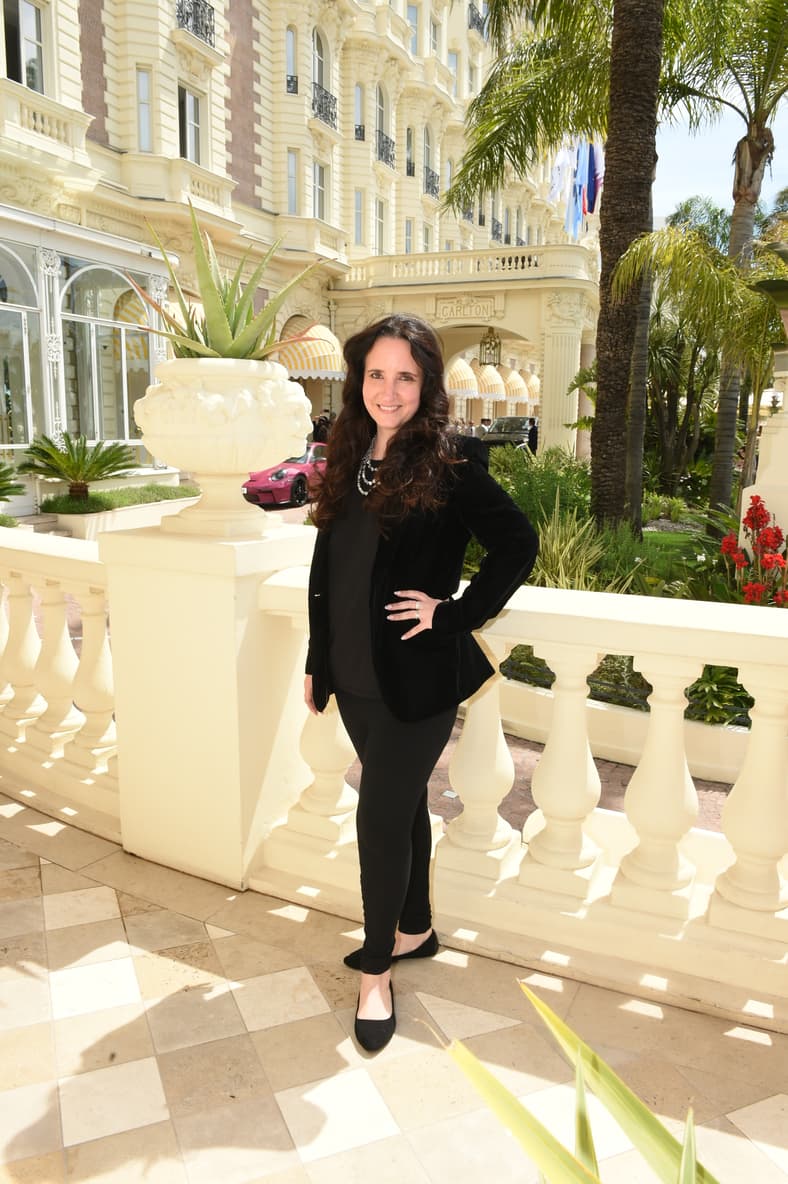
After Hartford, I go back across the Atlantic for the Venice Film Festival, then return to North America for the Toronto International Film Festival.
The festival circuit is not a series of isolated events. It’s a continuous conversation. The relationships you build at Cannes carry into Tribeca. The press you generate at Venice sets the table for Toronto. If you’re only showing up for one festival, you’re only hearing one movement of a much longer piece of music. My clients benefit from the fact that we are present at all of them, because we carry their narrative across the entire season.
This continuity is one of the least understood advantages of working with a dedicated festival publicist, and it is more important now than ever. In a fragmented, post-pandemic industry where relationships are harder to maintain across distance and time zones, the publicist who shows up at every major festival becomes a connective thread. She is the person who introduces a financier in Cannes to a director in Toronto, who follows up on a Venice meeting with a Tribeca introduction, who ensures that a client’s story does not end when the festival does but carries forward into the next chapter of the industry’s calendar.
You Don’t Have a Film. You Still Belong Here
This is an argument the industry has been slow to absorb: You do not need a film in the official selection to justify your presence at a festival. In the post-pandemic landscape, that old gatekeeping logic is not just outdated, it is actively harmful to the people who cling to it.
Some of the most effective festival activations I’ve ever orchestrated were for clients who didn’t have a single frame of film in the program: producers packaging new projects. Financiers looking to deploy capital. Technology companies. Post-production houses. Media platforms. Brands. These are the people shaping what gets made next. Festivals are where they position themselves, and a publicist is how they do it.
Consider the producer who is packaging a new project and needs to meet three specific financiers who will all be in Cannes during the same ten-day window. Consider the post-production company that wants to establish itself as a go-to partner for independent features. Consider the tech startup with a distribution tool that could change how films reach audiences. Consider the entertainment attorney building a client roster. Consider the actor between roles who needs to be seen, quoted, and remembered by the people who greenlight the next wave of projects.
None of these people have a film in the festival. All of them have business that depends on the festival. And in a world where the industry no longer gathers casually, where there is no studio commissary to bump into someone, no permanent festival-circuit social club, no reliable alternative to being physically present at the handful of events where the global industry converges, the stakes of attending without strategy have never been higher.
The Cost of Showing Up Unprepared
A festival appearance without a publicist is, in most cases, a wasted trip. You’ll spend thousands on flights, hotels, badges, meals, and events. You’ll have pleasant conversations. And then you’ll go home, and nothing will have changed. No one will write about you. No one will follow up. The cost of a publicist is a fraction of the cost of the opportunity you lose by going without one.
Executives who attend a market with JOPR return to meetings that would not have materialized otherwise. Filmmakers generate coverage that follows the project through distribution and beyond. Companies arrive at a festival unknown and leave with their name in the trades.
In an industry that has become more global, more fragmented, and more dependent on the festival circuit as its primary gathering mechanism, the publicist is no longer a luxury for filmmakers with premieres. She is essential infrastructure for anyone who takes their place in the entertainment industry seriously.
Film festivals remain the heartbeat of independent cinema and the circulatory system of the broader entertainment industry. In the years since the pandemic reshaped how the business operates, they have become something even more fundamental: the connective tissue that holds a scattered, decentralized, genuinely global industry together. They are where films find audiences, where companies find partners, where capital finds vision, and where careers accelerate, or stall.
You would not show up to a courtroom without a lawyer. So do not show up to a film festival, the place where your professional future may well be decided, without the person whose entire career is built on making sure you are seen, heard, and remembered. The spotlight at a festival is not a searchlight. It doesn’t scan the room looking for talent. It’s a follow spot. And someone has to aim it.
You can learn more about Jane Owen PR here. and follow our film estival coverage here.