
Aditya Ezhuthachan is an attorney focused on entertainment law with Beverly Hills-based Pessah Law Group. In this column, he addresses what filmmakers should know about fair use when using copyrighted clips, music, and other materials in their films. – M.M.
Fade In: A gavel SLAMS onto its base repeatedly! BANG BANG BANG. “Order in the court!” barks a steely-eyed JUDGE, staring down the defendant, a promising FILMMAKER, who stands frozen.
“To the charge of copyright infringement for the unauthorized use of clips and music” — the judge points the gavel — “how do you plead?”
Her career flashing before her eyes, the filmmaker GULPS. She whispers to her lawyer:“But isn’t it fair use?”
Filmmakers have a general sense that there are limits to a copyright owner’s ability to exclude others from using their protected material, and whether through experiences on prior films, independent research, or working with experts, many develop an intuitive sense of what safely qualifies as fair use.
However, sometimes artistic license or the material itself demands that filmmakers make choices that might cross the line into indefensible infringement. And sometimes the law can change, too. That’s why it’s a good question to ask early and often.
My courtroom scene is highly dramatized, but it’s meant to remind filmmakers that fair use is an affirmative defense — employed when the filmmaker has already been sued for copyright infringement. If that gives filmmakers a queasy feeling, good — it should serve as a warning that asserting fair use means one is already in an undesirable and potentially costly situation.
So, how does the law define “fair use”? To understand fair use, one must understand the underpinnings of copyright protection. The Copyright Clause (Article I, Section 8, Clause 8) of the U.S. Constitution states, in part: “To promote the Progress of… useful Arts, by securing for limited Times to Authors… the exclusive Right to their respective Writings…”. Therefore, copyright owners are granted the right to exclude others from exploiting their protected work, thereby promoting the creation of art, which is valuable to the nation.
However, this power to exclude comes into conflict with other creators’ constitutionally guaranteed rights: namely freedom of expression as enshrined in the First Amendment. Fair use derives from this inherent tension between copyright and the rights of others to utilize protected works in their own artistic expressions.
The case that established fair use in the United States was from 1841 and involved the verbatim reprinting of George Washington’s letters taken from an earlier publication, some of which were private and not printed elsewhere. Prior to this case, courts applied a doctrine that a shorter version of a longer work that demonstrates sufficient creativity established a separate copyright and, therefore, could not be infringement. However, in this case, the reprinted portions were ”the most instructive, useful and interesting to be found in that large collection.”
As a result, the court performed a new analysis applying a set of factors to determine whether the use was fair.
The court focused on the fact that the new work diminished the value of the original work and found that the use was not fair and was indeed infringement (“piracy” was the word they used back then).
And so,the legal doctrine of “fair use” was born, allowing for the limited use of copyrighted material without requiring permission from the copyright owner.
This judge-made doctrine evolved through lawsuits that refined the analysis and was later codified in the Copyright Act of 1976 or 17 U.S.C. § 107, which lists the four fair use factors a court considers:
1. The purpose and character of the use, including whether such use is of a commercial nature or is for nonprofit educational purposes;
2. The nature of the copyrighted work;
3. The amount and substantiality of the portion used in relation to the copyrighted work as a whole; and
4. The effect of the use upon the potential market for or value of the copyrighted work.
Purpose and Character of the Use
This first factor looks at the new work and whether it is commercial or non-commercial, the latter being more likely to be fair use. This is also where the court examines whether the work constitutes news, commentary, criticism, scholarship, or parody; all favorable factors in finding for fair use.
A famous case from 1994 involving the rap group 2 Live Crew and their song “Pretty Woman,” a raunchy parody of the Roy Orbison classic, “Oh, Pretty Woman,” is one of the most significant legal cases on this issue. The case established that courts look to see if a work is transformative in that its expression or meaning becomes different, causing the use to be fair. Courts continued down this path, leading to divisive opinions where even minor changes were considered transformative, eventually causing a groundswell of criticism.
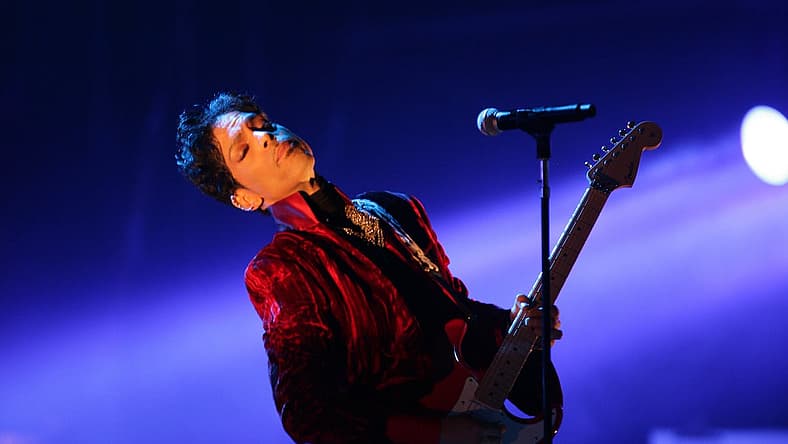
The current Supreme Court appeared to buck this trend in a ruling that a Warhol piece, “Orange Prince,” based on a photograph of the musician, was not sufficiently transformative to be fair use because its use was commercial in nature (licensed for use in a Vanity Fair article about Prince), rendering the work a mere substitute for the original photograph. This ruling has plenty of critics too.
Nature of the Copyrighted Work
The second factor looks at the original work to essentially determine how worthy the work is of protection.
One court summed it up by saying this factor “turns on whether the work is informational or creative.”
This factor is rarely determinative, but in a recent case involving Google’s use of Java code, the court focused on the fact that the code itself was largely uncopyrightable and, therefore, Google’s use was found to be fair.
Amount and Substantiality of the Portion Used
The third factor seems self-explanatory, and the more that is used from the original work, the less likely the use will be considered fair.
Then again, there are instances where copying the entire work was found to be fair use, such as when Universal Studios sued Sony, claiming home video recorders facilitated copyright infringement, but the court felt that home viewers recording movies from broadcast television for later viewing was fair use.
It’s also worth noting that the most substantial portion of a work may be a small fragment if it is the “heart of the work.”
A famous example is a magazine article that published the portion of Gerald Ford’s memoirs pertaining to the pardon of Richard Nixon, widely understood to be the reason people wanted to buy the book.
Effect of the Use Upon the Potential Market
The fourth factor looks at how the new work affects the market for the original work.
The court in the “Pretty Woman” case mentioned that the work was transformative and a rap derivative of a rock song, suggesting doubt that the newer work could supplant the market for the original.
However, in the “Orange Prince” case, the first factor analysis (commercial vs. non-commercial) necessarily touched on the potential market and did indeed find that the Warhol piece supplanted the original photograph’s market.
The experienced filmmaker will say the production is insured for just this reason, and that’s true!
But by the time the attorney is brought in to draft the opinion letter in support of the Errors & Omissions insurance application, the film is often deep in postproduction.
Therefore, filmmakers should be armed with an understanding of potential fair use issues from the start to apply that knowledge through development, pre-production and production.
Better yet, involve experienced counsel early to analyze and assess options including seeking permission to use copyrighted materials, filming or editing scenes differently, or removing or replacing material altogether.
With thoughtful preparation, creative decision making, and legal diligence, filmmakers can realize their vision while keeping their films safe from potential liability.
Please note that the information presented here is meant to be educational in nature and to provide a broad overview of the topic discussed, and filmmakers should always consult an experienced entertainment lawyer to identify and analyze the risks their projects may encounter.
Got a film-related legal question? Email Aditya Ezhuthachan at [email protected].
Main image: The late, great Prince, seen aboveperforming in 2011, was the subject of a complex fair-use case. Courtesy of Shutterstock