
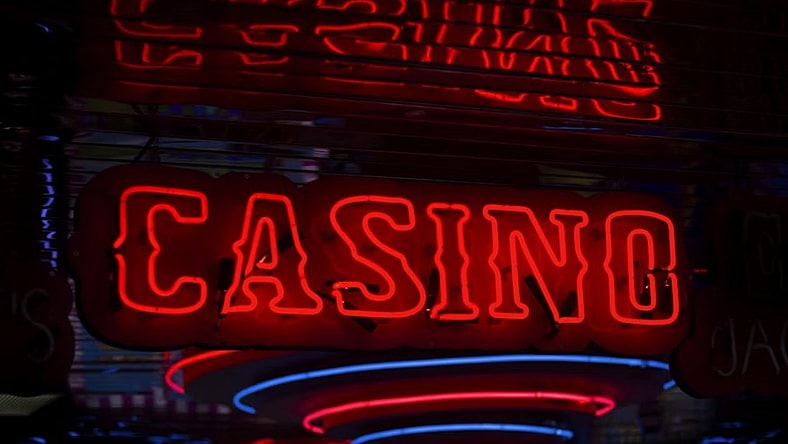
In the movies, casino scenes have great lighting, confident smiles, and timely wins that are nothing short of perfection. It all makes you start to believe that maybe luck can be trained. But, if you’ve ever actually sat at a poker table or watched a slot machine spin, you know that’s pretty much a stretch from reality.
And, of course, it is. Hollywood’s job isn’t to teach you about odds, but to make you feel like you’re the main character. Still, it’s all quite interesting to look into, as the way movies play their cards says more about us as humans than the games themselves.
The Myth of the Lucky Genius
Movie casinos love the guy who walks in like he owns the place, takes the most mind-blowing risks, and then walks away richer than the house. Rounders turned poker into a game of destiny. 21 made blackjack look like a secret math cult for prodigies.
In reality, the games aren’t nearly that cinematic. Real players spend hours studying odds, bankrolls, and platforms, from classics like Slots.lv to modern options found on any list of Slotslv alternatives. They do this not for the thrill of a movie montage, but to compare game variety, promotions, and payout speed to get a real sense of what it takes to win.
There’s also the drama in these movies that comes with simple things, like counting cards, for example. Card counting isn’t illegal, yes, but good luck trying it for as long as they do in the movies. No player gets away with the continuous shuffle machines and automatic deck rotations that casinos use. You’ll get flagged faster than you can say Jack Robinson.
And those poker scenes where someone wins every hand with impossible precision are pure storytelling fuel. What movies do, really, is edit out the boring bits. You know, the fold after fold, the endless small losses that actually define professional gambling. That’s where the tension is real, but it doesn’t sell movie tickets and popcorn.
How Hollywood Plays With the Odds
Films don’t just exaggerate the games; they rewrite the odds entirely. Slots in movies always pay off at the perfect moment, which is usually when the underdog needs redemption. Roulette wheels land on a single number like fate intervened. Poker gets the same treatment. Casino Royale, Molly’s Game, and Lucky You all sold poker as a battle of charisma and guts.
But casinos are designed on math, not magic. The house edge in roulette alone sits at around 5.26% on American wheels. That means for every $100 you bet, you’ll statistically lose about $5 over time. No filmmaker is willing to fit that kind of slow, drawn-out game into a 120-minute script. And you see, that’s really where they miss it. The mental grind behind every decision on the casino floor is inevitably relevant.
In real tournaments, poker players fold about 75% of their hands. There’s no dramatic soundtrack, no slow-motion reveal of the winning card. Just patience, math, and mind games. The real tension is in reading your opponent without giving away that your heart rate just spiked.
When Movies Actually Get It Right
Some films nail the aura of the casino world without pretending to teach you how to win. Martin Scorsese’s Casino (1995) showed how tightly the whole system runs behind the glitz and glam. The movie shows you the surveillance rooms, pit bosses, money counting, and the illusion of freedom that keeps everyone playing.
Another is Mississippi Grind, which is, quite honestly, an underrated film that actually gets gambling psychology right. No overblown wins, no perfect hands, just two men chasing hope through cards, dice, and self-delusion. That’s as real as it gets.
And if you look closer, newer films and shows like Molly’s Game or Uncut Gems add chaos in a way the old ones didn’t. It comes from the science that people are more drawn to the rush, rather than the win itself. Movies just compress that feeling into two electrifying minutes instead of two exhausting hours.
That rush is also what keeps the real industry spinning. As of 2024, the global casino and gaming market was worth $160.6 billion and is set to reach $170.9 billion by 2035. Now, while that rise may not be as dramatic as Hollywood makes everything to be, it’s enough to show that players’ risk appetite isn’t going anywhere.
So, Are Casino Games Accurately Portrayed in Movies?
Well, not exactly. They’re emotionally true in the way they try to capture the psychology, but when it comes to the real probability, not so much. If you walked into a casino expecting a Casino Royale moment, you might be a little disappointed.
If you went in, however, to feel that same mix of fear and thrill, you’d understand exactly what Hollywood’s been selling all along, which is the story of human risk. They may romanticize it, but maybe that’s the whole point. Maybe these movies exist to tap into the human need to control uncertainty.