

Many 1970s TV shows are classics — but that doesn’t mean you’d enjoy watching them now.
The following shows are different — turn them on now, and they’re still a pleasure to watch.
Here we go.
But First
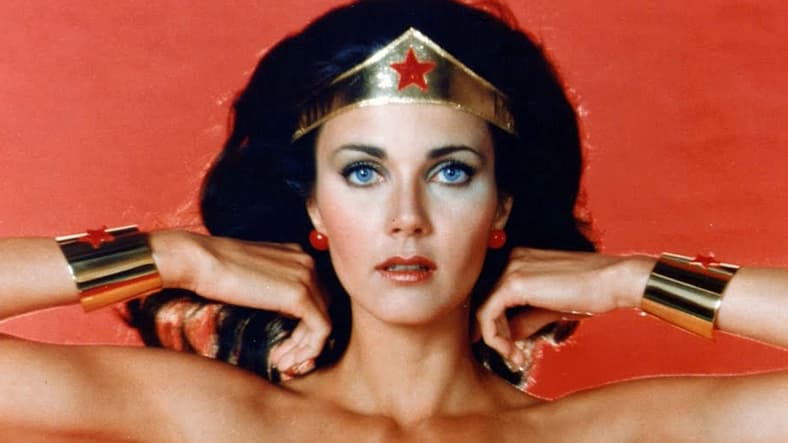
What do we consider a 1970s TV show?
Of course we’re including shows that aired entirely in the ’70s, but we’re also listing shows that aired mostly in the ’70s, even if they extended into the ’80s. If a show started in the ’70s but aired mostly in the ’80s, we consider it an ’80s show.
But also, we know a 1970s TV show when we see one: That’s why we’re counting one notable late night show that is still on the air as a 1970s TV show. So excuuuuuse us.
And now, on with the list.
Charlie’s Angels

’70s TV shows often tried to have it both ways: viewers wanted empowered women, to reflect the rise of the feminist movement, but they also liked the ratings that came from putting those women in swimsuits, even if it maybe possibly seemed a little kind of potentially objectifying.
So you got shows like Charlie’s Angels, where strong, smart women solved crimes… in a series of interesting outfits.
Created by Ivan Goff and Ben Roberts for ABC, it aired from 1976 to 1981 and featured original Angels Kate Jackson, Farrah Fawcett, and Jaclyn Smith, who received assignments from their unseen boss Charlie (John Forsythe). Subsequent Angels included Cheryl Ladd, Shelley Hack and Tanya Roberts.
The Partridge Family
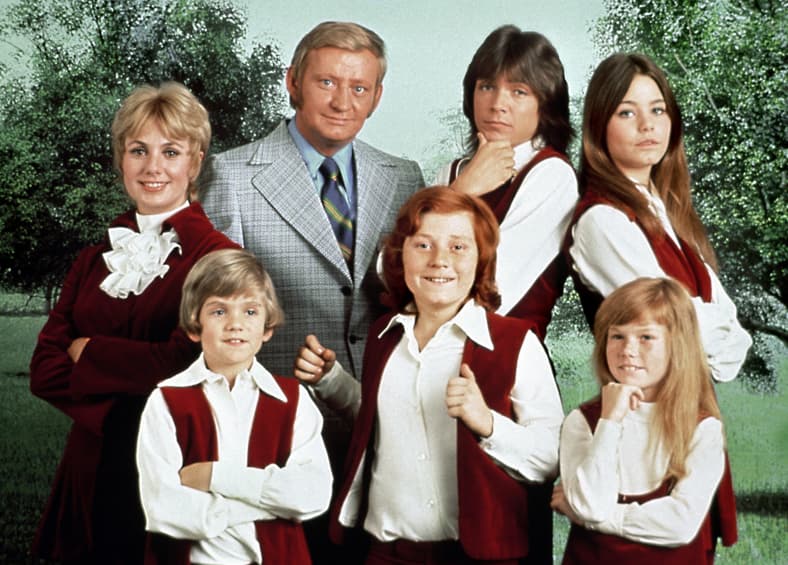
The Partridge Family stars Shirley Jones as a widowed mother who enlists her five kids to make a hit record, which leads them to lead a double life as hilariously polished rock stars and a normal suburban family.
There’s something both comforting and eerie about The Partridge Family.
Lead kids David Cassidy and Susan Dey both have a seemingly effortless early ’70s charm that seems made for teen magazines, and Shirley Jones, a well-established musical star even before the show began, is the personification of Let’s-Put-on-a-Show energy.
But it all feels a little dreamily… false?
Which is maybe exactly what we want in a ’70s TV show.
The Brady Bunch
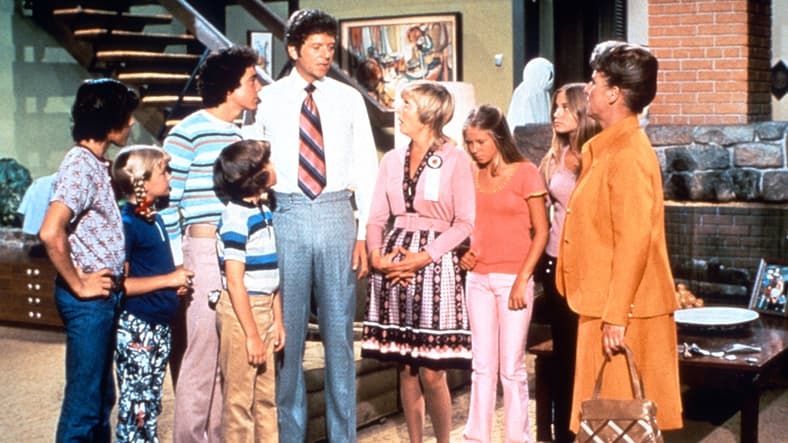
We can’t include the Partridge Family and leave out The Brady Bunch.
This one has an especially massive place in the hearts of Gen Xers, who had memorized scenarios like Jan’s invention of perfect boyfriend George Glass long before “sure Jan” became a meme for today’s youth.
The show walked a fine line between squeaky clean and funky, and still feels as safe and cozy as a carpeted basement.
It ran for five seasons on ABC, starting in 1969, but has been endlessly revisited, rewatched and reinvented.
Saturday Night Live
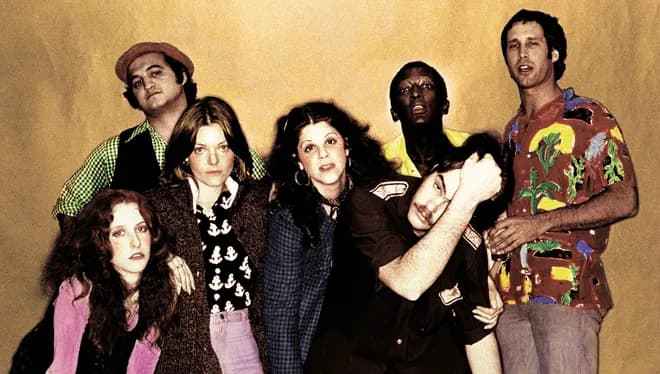
We know, Saturday Night Live is still on the air, five decades later.
But when it debuted in 1975 with the original Not Ready for Primetime Players, it was the show of the ’70s — and modern audiences are still familiar with long-ago stories like the death of General Francisco Franco and a shooting involving actress Claudine Longet because of the show’s endless syndicated run.
It’s striking that so many SNL sketches of the ’70s still feel not only funny, but dangerous.
Happy Days
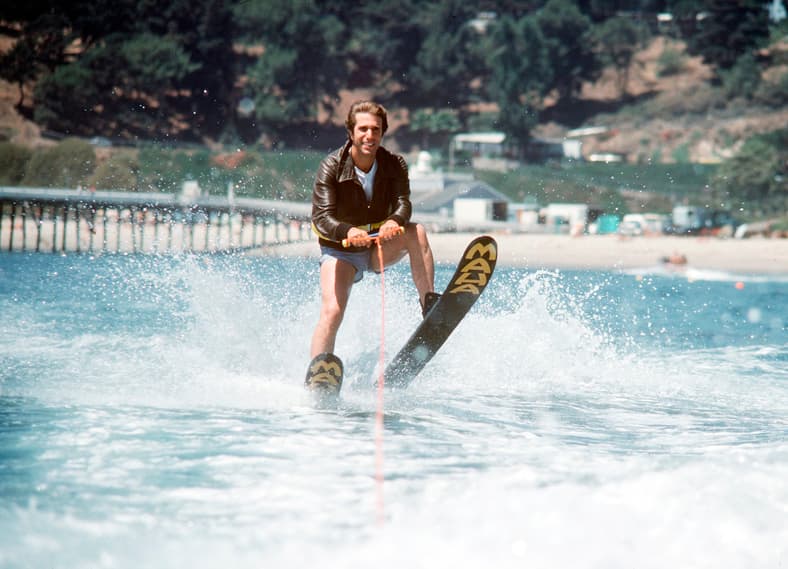
Happy Days has an advantage over many of the ’70s shows that feel impossibly dated today: It was supposed to feel dated. It embraced the 1950s nostalgia that swept much of the 1970s (See also: Grease and Sha Na Na.)
The castmates were endlessly charming, especially nice-guy Richie Cunningam (future mega director Ron Howard) and impossibly cool Arthur “Fonzie” Fonzarella (Henry Winkler).
It was such a success that it also led to the spinoffs Mork & Mindy, Laverne & Shirley, and Joanie Loves Chachi.
It ran on ABC from 1974 to 1984, and in our book, Happy Days never jumped the shark.
Kung Fu
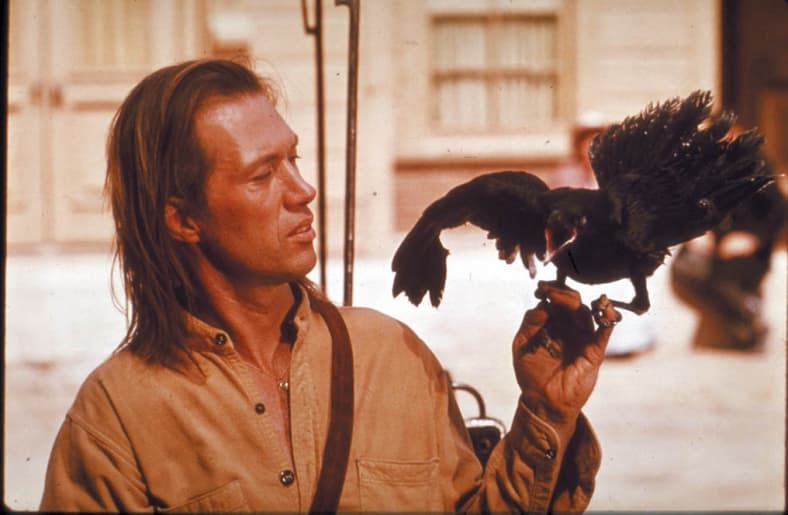
If you like Quentin Tarantino movies, you’ll also love watching a show that had a massive influence on them. It all climaxed in QT casting Kung Fu star David Carradine in Kill Bill.
Carradine played Kwai-Chang Caine on Kung Fu, and one of the many amusements of Kung Fu is shaking your head at how wrong that casting is. But as you can say of so many inexplicable things that happened all those decades ago: It was the ’70s.
The show was a shrewd attempt to cash in on the kung-fu craze of the early ’70s that owes its existence largely to the breakthrough success of Bruce Lee. His widow, Linda Lee Cadwell, asserts that he had the original idea for Kung Fu before his tragic death in 1973, but Lee biographer Matthew Polly asserts that Lee did not come up with the idea for the show.
Like any good martial artist, the show had great timing: It was first broadcast in 1972, just after President Nixon’s historic meeting with Chairman Mao, when U.S. interst in the East was very high. It aired until 1975.
It also featured a who’s-who of intriguing guests, including Cannonball Adderly, Harrison Ford, Jodie Foster, Pat Morita, and Carl Weathers.
The Mary Tyler Moore Show
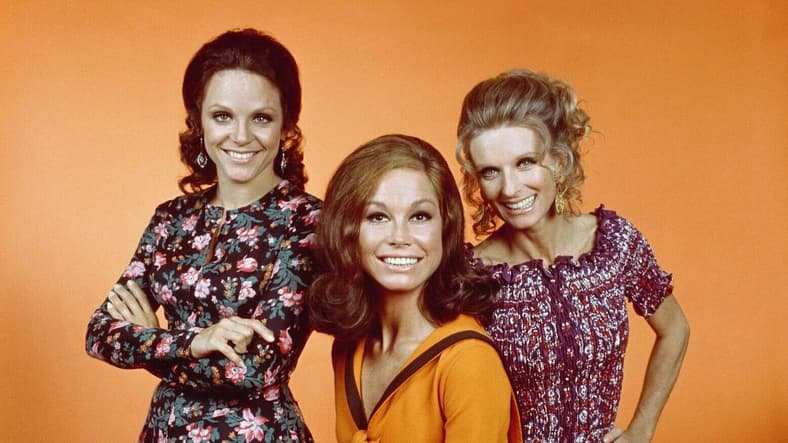
Groundbreaking for its portrayal of an unmarried, independent working woman, The Mary Tyler Moore Show is regularly cited as one of the best TV shows of all time.
Starring the magnetic Mary Tyler Moore, it was created by James L. Brooks and Allan Burns and aired from 1970 to 1977 on CBS, earning three consecutive Emmy Awards for Outstanding Comedy. Moore, meanwhile, won Moore won three Emmys for Best Lead Actress in a Comedy.
The show also had one of the best sitcom casts ever — one that included Ed Asner, Gavin MacLeod, Ted Knight, Betty White, Valerie Harper, and Cloris Leachman.
All in the Family

One of many great Norman Lear sitcoms, All in the Family is a pleasure for the jokes and cast chemistry, but also an intellectual joy as well, since its serves so well as a time capsule of a changing America. It ran for nine seasons starting in 1971.
Carroll O’Connor’s Archie Bunker was a cantankerous work in progress, and someone who always felt human and like a man at least trying to be good, even as he offensive, espoused outdated ideas. We appreciate the genius of Rob Reiner all the more, seeing him in his youth as the optimistic Michael Stivic, aka Meathead.
Jean Stapleton and Sally Struthers also earned plenty of laughs. And the bench of supporting characters was strong enough to launch The Jeffersons and Maude.
It’s on our list of daring TV shows that just don’t care if you’re offended.
The Jeffersons
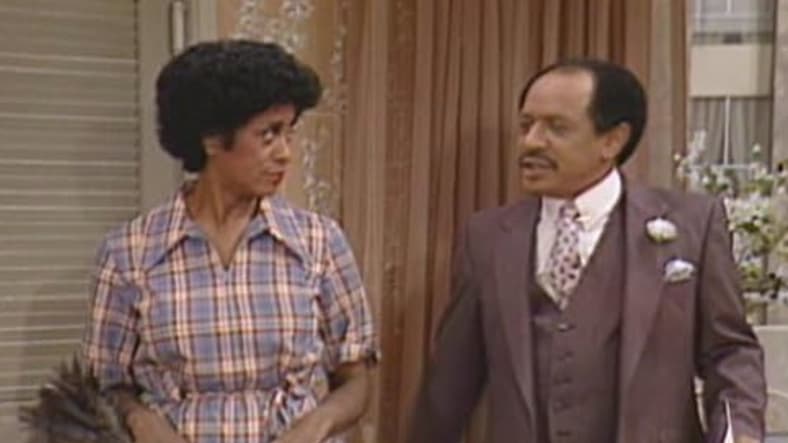
Movin’ on up the list is the aforementioned All in the Family spinoff.
The Jeffersons follows George Jefferson (Sherman Hemsley), whose dry-cleaning business becomes so successful that he and his wife Louise (Isabel Sanford) move from Queens to the Upper East Side of Manhattan.
The cast chemistry crackles, the jokes are still solid, and The Jeffersons is historic: It ran from 1975 to 1985, which made it, for a long time, the longest-running sitcom with a primarily Black cast. (Tyler Perry’s House of Payne eventually broke the record.)
Battlestar Galactica
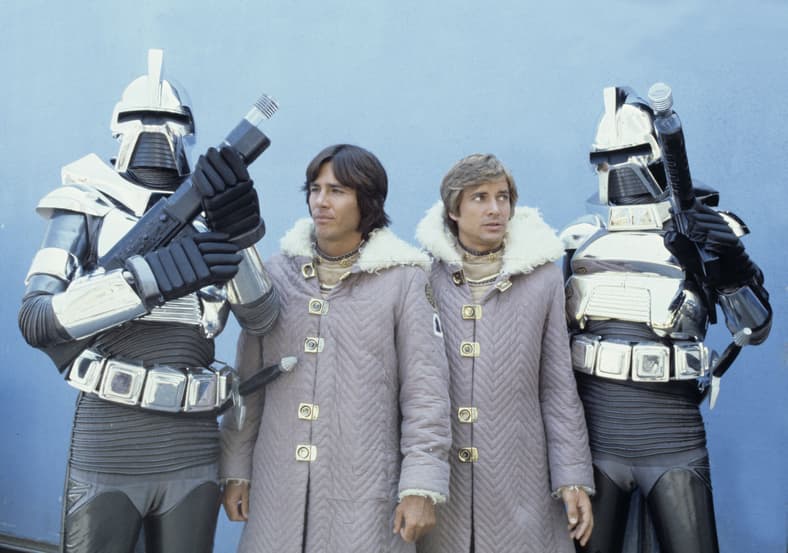
Battlestar Galactica has such a cultural footprint that its hard to believe it only ran for one season, 1978-79. It also had a TV movie and an unsuccessful, scaled-down run under the title Galactica 1980. And its
It was one of many TV shows and films of the late 1970s and early ’80s that tried to quickly cash in on the success of Star Wars, but Battlestar Galactica had it own goofy swagger, thanks to the interplay of an ensemble cast led by Lorne Greene, Richard Hatch, Maren Jensen, and Dirk Benedict, who would later go on to The A-Team fame. (Jane Seymour also appeared in the movie and five episodes.)
What makes the show so watchable, even today, are the Cylons. They’re simply the coolest robots TV ever spawned, and you feel their influence from Daft Punk to, of course, the Battlestar Galactica reimagining that aired on the Sci-Fi Network from 2003 to 2009.
Sharp-eyed viewers may note that the show borrows here and there from Mormon theology, which reflects that creator Glen A. Larson was a member of the Church of Jesus Christ of Latter-day Saints.
Good Times
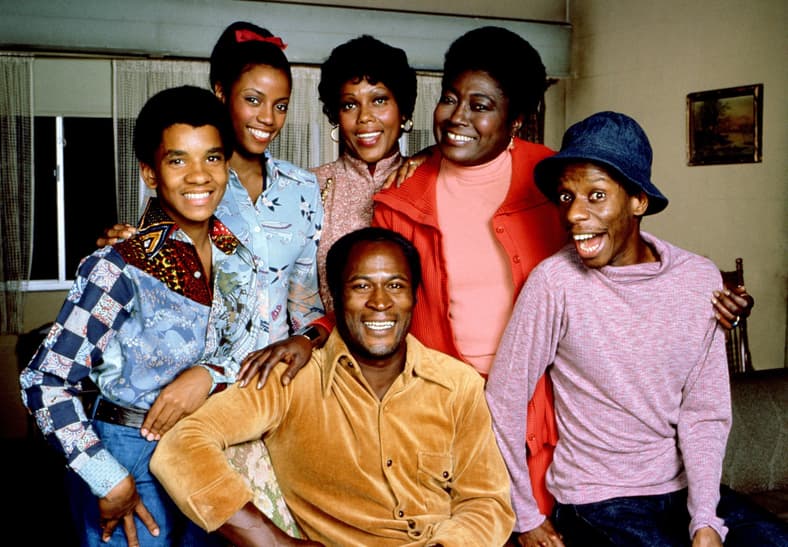
Good Times was a very rare thing in the 1970s — a sitcom about a Black family created by Black people. It came from Eric Monte and Mike Evans, the latter of whom played Lionel Jefferson on both All in the Family and The Jeffersons.
Good Times was built around Esther Rolle and John Amos, but quickly became a comic showcase for the brilliant Jimmy Walker, who is the reason we still say “Shalom” when we answer the phone. It was also an early showcase for the young Janet Jackson.
Good Times felt realer than most sitcoms of the day, with its direct but witty handling of issues ranging from dating to drugs.
Wonder Woman
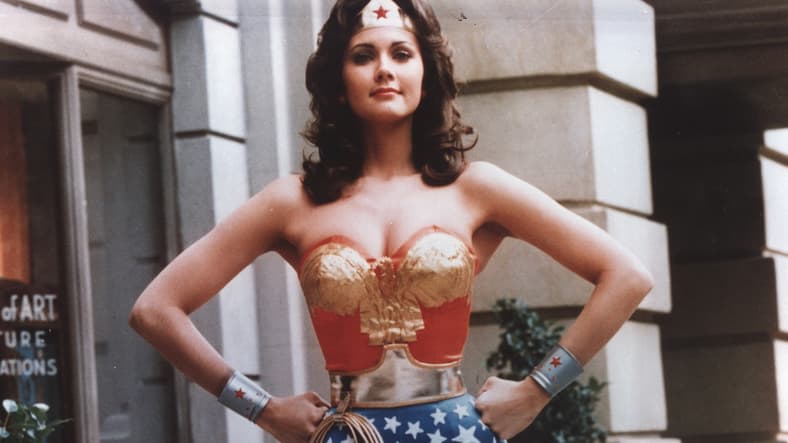
If we’re allowed to watch just one ’70s TV show, we’re going with Wonder Woman.
Lynda Carter is one of the most charismatic people to ever light up a screen as Diana Price/Wonder Woman, a super hero no one can defeat. She deflects bullets with her bracelets, lassoes bad guys into telling the truth, and has the baddest TV theme song of the ’70s (or any decade).
Curiously, Wonder Woman started out in 1975, set during World War II. But then it jumped from ABC to CBS, where it was known as The New Adventures of Wonder Woman and took place in the modern day — the modern ’70s, that is.
It was exquisitely shot, which means it avoids the dinginess of many 1970s TV shows and movies, and still feels bright and modern even today.
If you like this list, we’d love for you to follow us for more stories like this.
Main image: Lynda Carter in Wonder Woman. ABC